Grade 12 Study Resources & Past Papers

ACE MY EXAMS MATRIC STUDY HUB

Grade 12 Study Resources Study with purpose. Practise with confidence. Prepare for matric.

Make your final school year more organised with Grade 12 study resources for South African learners. Explore subject learning materials, revision support, Grade 12 past papers, memorandums and online practice to help you understand your work and prepare for examinations.

Find learning and revision support in one place
Grade 12 learner using online study resources and taking notes in a library
Make every study session countLearn · Revise · Practise

YOUR MATRIC YEAR, MADE MORE MANAGEABLE

Build a study routine that works for you

Grade 12 is an important year. You are bringing together knowledge from earlier grades, learning more advanced concepts and preparing to show what you know in your final assessments. With several subjects to manage, it can be difficult to decide what to study first, which topics need more attention and how to use your time well.

ACE My Exams brings together Grade 12 study resources to help you approach your work in a more structured way. You can use subject materials to revisit important ideas, work through questions to check your understanding and use past examination papers to become familiar with the style of exam questions. The aim is not to study everything at once. It is to make steady progress, one subject and one topic at a time.

Whether you are revising after school, preparing for a class test or working towards your final examinations, start with the subject or topic you need most. Set a realistic goal for each session, keep track of what you have covered and return to difficult sections until the ideas become clearer.

LEARN AT YOUR OWN PACE

Small steps can make a big difference

Use your study time to understand, practise and review. You do not need a perfect study day to make progress. A focused session on one topic can help you build confidence for the next one.

A diverse group of Grade 12 students collaborating on online learning and revision

PRACTISE WITH EXAM-STYLE QUESTIONS

Grade 12 Past Papers and Memorandums

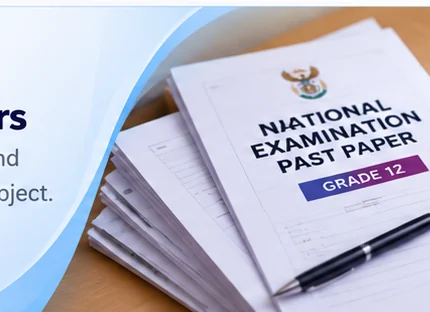
Past examination papers are useful because they allow you to practise answering questions in an examination-style format. They can help you become familiar with how questions are presented, how topics may be assessed and how to organise your answers under timed conditions.

Use Grade 12 past papers as part of your revision rather than waiting until the final days before an examination. Start with a paper or a section that matches the work you have already revised. As your preparation improves, attempt longer sections and full papers where appropriate.

Learn how to use past papers
EXAM PRACTICE

Make practice part of your routine

  • Choose a paper for the subject and topic you are revising.
  • Read every instruction before you begin.
  • Attempt the questions before checking the memorandum.
  • Mark your work and identify the topics you need to revisit.
  • Try similar questions again after reviewing your mistakes.

Practise to understand your progress, not simply to finish a paper.

Student studying online on a laptop in a relaxed campus learning environment

LEARN FROM YOUR ANSWERS

Use memorandums to understand your mistakes

A memorandum is more than a way to check whether an answer is right or wrong. It can help you see what a question expects and how an answer can be structured. After attempting a question, compare your response with the memorandum and identify the point where your reasoning or method differed.

For calculation questions, check the method and working as well as the final answer. For written questions, look at the important facts, terms and explanations included. If you missed a point, add it to your revision notes and practise a similar question later.

PLAN, PREPARE AND KEEP PRACTISING

Grade 12 Exam Preparation

Good Grade 12 exam preparation is built over time. A useful plan gives you enough structure to cover your subjects while leaving room to spend longer on difficult topics. It should fit your school timetable, responsibilities and energy levels. A realistic routine that you can follow is more helpful than an ambitious timetable that becomes impossible to maintain.

1

Know what you need to cover

List your subjects and the topics you need to revise. Use your class notes, school guidance and relevant curriculum material to identify what belongs in your preparation. Break large topics into smaller sections so that each study session has a clear purpose.

2

Set a manageable weekly plan

Choose specific subjects and topics for each day. Include time for written practice, calculations, reading and reviewing previous work. Leave some flexibility for school tasks, tests and topics that need extra attention.

3

Study actively

Do more than read through notes. Explain a concept in your own words, solve a problem without looking at the example, label a diagram from memory or answer a short question. Active recall helps you see what you understand and what still needs work.

4

Practise and review

Use questions and Grade 12 past papers to apply what you have studied. Check your answers, make a note of recurring errors and revisit the relevant section. Keep a short list of topics that you want to practise again.

5

Look after your concentration

Study in focused blocks and take short breaks when you need them. Keep your phone and other distractions away during a session where possible. Sleep, meals and rest are part of a sustainable routine, especially during busy assessment periods.

MAKE YOUR REVISION MORE EFFECTIVE

Simple ways to improve your study sessions

Break topics into smaller sections

When a topic feels difficult, divide it into parts. Learn one definition, process, formula or skill before moving to the next. Once you understand the individual parts, practise questions that connect them. This makes a large amount of work feel more manageable and gives you a clear way to measure progress.

Use your own words

After reading a section, close your notes and explain the main idea as if you were teaching it to someone else. If you cannot explain it clearly, return to the material and identify what is missing. Writing a short summary in your own words can be more useful than copying a full page without thinking about it.

Keep an error list

When you get a question wrong, write down the topic and the reason for the mistake. It may be a misunderstood concept, a missed instruction, an incorrect calculation or an answer that did not include enough detail. Review this list regularly and use it to choose your next practice activity.

Mix revision with exam practice

Reading notes helps you review information, while questions help you apply it. Include both in your routine. You might revise a section first, answer a few topic questions and then return to the memorandum to check your understanding. As examinations approach, increase the amount of timed practice where it suits your preparation.

Ask for help when you are stuck

If you have tried a question several times and still do not understand it, make a note of the exact step that causes difficulty. Ask a teacher, tutor or classmate to explain that part. A specific question is easier to work through than saying that an entire subject is confusing.

LEARNING SUPPORT WHERE YOU STUDY

Make online learning part of your routine

Online learning can make it easier to return to a topic when you need another explanation or a different way to practise. Use digital study materials alongside your schoolwork, not as a replacement for attending lessons or following the guidance given by your teachers.

Choose a quiet place where you can concentrate, keep your notes nearby and decide what you want to achieve before opening a lesson or resource. If you are watching a revision video, pause when you reach an important idea and write down the key point. After the video, try a question or explain the concept without looking at your notes.

When studying with classmates, take turns explaining difficult ideas and comparing approaches to questions. Collaboration can help you notice a step you missed, but make sure you can complete the work independently too. Your own understanding is what you will need when you sit for an assessment.

Male Grade 12 learner celebrating progress while studying online with a laptop
Stay curious. Keep practising.Progress comes from consistent effort.

FIND A USEFUL PLACE TO BEGIN

How to use these Grade 12 study resources

You can approach the resource hub in the way that best matches your current schoolwork. If you are learning a topic for the first time, begin with the relevant subject material. If you have already covered it in class, use revision and questions to check what you remember. If you are preparing for an examination, add past-paper practice to your routine.

01

Choose a subject

Start with one of your Grade 12 subjects and identify the topic you are working on at school.

02

Review the topic

Use relevant notes or learning materials to revisit concepts, definitions, methods and examples.

03

Test your understanding

Answer questions without immediately checking the solution. Notice which parts you can do confidently.

04

Return to what needs work

Use your mistakes to decide what to revise next, then try similar questions again.

YOUR NEXT STUDY SESSION STARTS HERE

Take the next step in your matric preparation

Choose a subject, set one achievable goal and begin. Return to your Grade 12 study resources whenever you need to review a topic, practise questions or prepare for an assessment. Consistent effort, thoughtful revision and learning from mistakes can help you approach your work with greater confidence.

TURN PREPARATION INTO CONFIDENCE

Getting ready for an examination

As an examination gets closer, shift some of your study time from learning new material to reviewing and applying what you already know. Look over the topics you have covered, revisit your error list and choose questions that test the areas where you need more practice. Avoid trying to learn an entire subject in one late-night session. A calm, organised review gives you a better opportunity to remember the work you have studied.

When you practise a paper, pay attention to the time available and the marks allocated to each question. This can help you think about how much detail an answer needs. Read the wording carefully, underline key instructions if that helps you, and make sure you answer what is being asked. If a question is difficult, move on when appropriate and return to it later if time allows.

Before the examination, check the information and instructions provided by your school. Prepare the stationery and other permitted items you need, plan your travel and give yourself enough time to arrive. During the paper, read all instructions, number answers clearly and leave a little time to review your work where possible.

After an assessment, take a moment to reflect on your preparation. Which topics felt familiar? Which questions took longer than expected? Did you understand the instructions? Use those observations to improve the way you prepare for the next subject. Every assessment can give you useful information about what to practise next.

Keep a balanced approach

It is normal to feel pressure during Grade 12, especially when several subjects have assessments close together. Try to focus on the task in front of you instead of comparing your progress with someone else’s. Ask a teacher or trusted person for support if you feel overwhelmed. Take breaks, get enough rest and remember that steady preparation is made up of many small efforts over time.


COMMON QUESTIONS FROM MATRIC LEARNERS

Grade 12 Study Resources – FAQs

What are the best ways to use Grade 12 study resources?

Start with the topic you are studying at school. Review the relevant material, make brief notes in your own words and answer questions to check your understanding. Use your results to decide what to revise next. A regular routine is usually more manageable than trying to cover everything in one session.

How should I use Grade 12 past papers?

Choose a paper that matches the subject and work you have revised. Attempt the questions before looking at the memorandum. Where possible, work under timed conditions, then mark your answers and review mistakes. Use the questions you found difficult to guide your next revision session.

Why are memorandums useful?

Memorandums help you compare your answer with the expected points or method. They can show where you left out a detail, used an incorrect process or misunderstood what the question asked. Use them to learn from an attempt rather than only to count marks.

How can I prepare for more than one subject?

Plan your week so that you return to each subject regularly. Give extra time to topics you find challenging, but keep practising subjects where you are already making progress. Break each subject into smaller tasks and adjust your plan as school assessments and deadlines change.

How much time should I spend studying each day?

The right amount depends on your timetable, workload and concentration. Set a realistic target that you can maintain, use focused study blocks and take breaks. Make sure your plan includes enough time for sleep, meals, school responsibilities and rest.

Can online learning help with matric revision?

Online learning can provide another way to review concepts, watch explanations and practise questions. Use it alongside your class notes and teacher guidance. Pause to make notes, test what you remember and apply the ideas to questions rather than watching lessons passively.

What should I do if I keep getting questions wrong?

Look for the reason behind each mistake. Check whether you misunderstood the concept, missed an instruction, used the wrong method or did not explain your answer fully. Revisit that part of the topic, ask for help if necessary and try a similar question again.

FIND YOUR SUBJECT

Explore Grade 12 Subjects Access Your Study Resources

Choose your Grade 12 subject to explore available study materials, learning resources, past papers, revision content and assessments on Ace My Exams.

YOUR MATRIC LEARNING HUB

Grade 12 Study Materials Learning Resources to Support Your Studies

Find learning materials and exam preparation resources through our Grade 12 subject pages. Choose your subject to explore the resources available on Ace My Exams.

📚 LEARN

Study Notes and Learning Materials

Explore subject learning materials and study content to help you understand important concepts and prepare for your Grade 12 examinations.

Find Your Subject →
🎯 EXPLORE

Topic Lessons and Revision

Work through subject topics and revision content to strengthen your understanding and revisit areas that need more practice.

Explore Subject Lessons →
▶️ WATCH

Grade 12 Revision Videos

Use available learning videos and explanations to review subject content, understand key ideas and support your exam preparation.

Find Revision Videos →
✍️ PRACTISE

Online Quizzes and Assessments

Test your understanding with available online quizzes and assessments designed to help you practise and identify areas for improvement.

Explore Assessments →
✦

Start with Your Subject

Resources differ between subjects. Open your Grade 12 subject page to see the learning materials, lessons, videos and assessments currently available.

Browse Subjects →

ACE MY EXAMS MATRIC STUDY HUB

Grade 12 Study Resources Study with purpose. Practise with confidence. Prepare for matric.

Make your final school year more organised with Grade 12 study resources for South African learners. Explore subject learning materials, revision support, Grade 12 past papers, memorandums and online practice to help you understand your work and prepare for examinations.

Find learning and revision support in one place
Grade 12 learner using online study resources and taking notes in a library
Make every study session countLearn · Revise · Practise

YOUR MATRIC YEAR, MADE MORE MANAGEABLE

Build a study routine that works for you

Grade 12 is an important year. You are bringing together knowledge from earlier grades, learning more advanced concepts and preparing to show what you know in your final assessments. With several subjects to manage, it can be difficult to decide what to study first, which topics need more attention and how to use your time well.

ACE My Exams brings together Grade 12 study resources to help you approach your work in a more structured way. You can use subject materials to revisit important ideas, work through questions to check your understanding and use past examination papers to become familiar with the style of exam questions. The aim is not to study everything at once. It is to make steady progress, one subject and one topic at a time.

Whether you are revising after school, preparing for a class test or working towards your final examinations, start with the subject or topic you need most. Set a realistic goal for each session, keep track of what you have covered and return to difficult sections until the ideas become clearer.

LEARN AT YOUR OWN PACE

Small steps can make a big difference

Use your study time to understand, practise and review. You do not need a perfect study day to make progress. A focused session on one topic can help you build confidence for the next one.

A diverse group of Grade 12 students collaborating on online learning and revision

PRACTISE WITH EXAM-STYLE QUESTIONS

Grade 12 Past Papers and Memorandums

Past examination papers are useful because they allow you to practise answering questions in an examination-style format. They can help you become familiar with how questions are presented, how topics may be assessed and how to organise your answers under timed conditions.

Use Grade 12 past papers as part of your revision rather than waiting until the final days before an examination. Start with a paper or a section that matches the work you have already revised. As your preparation improves, attempt longer sections and full papers where appropriate.

Learn how to use past papers
EXAM PRACTICE

Make practice part of your routine

  • Choose a paper for the subject and topic you are revising.
  • Read every instruction before you begin.
  • Attempt the questions before checking the memorandum.
  • Mark your work and identify the topics you need to revisit.
  • Try similar questions again after reviewing your mistakes.

Practise to understand your progress, not simply to finish a paper.

Student studying online on a laptop in a relaxed campus learning environment

LEARN FROM YOUR ANSWERS

Use memorandums to understand your mistakes

A memorandum is more than a way to check whether an answer is right or wrong. It can help you see what a question expects and how an answer can be structured. After attempting a question, compare your response with the memorandum and identify the point where your reasoning or method differed.

For calculation questions, check the method and working as well as the final answer. For written questions, look at the important facts, terms and explanations included. If you missed a point, add it to your revision notes and practise a similar question later.

PLAN, PREPARE AND KEEP PRACTISING

Grade 12 Exam Preparation

Good Grade 12 exam preparation is built over time. A useful plan gives you enough structure to cover your subjects while leaving room to spend longer on difficult topics. It should fit your school timetable, responsibilities and energy levels. A realistic routine that you can follow is more helpful than an ambitious timetable that becomes impossible to maintain.

1

Know what you need to cover

List your subjects and the topics you need to revise. Use your class notes, school guidance and relevant curriculum material to identify what belongs in your preparation. Break large topics into smaller sections so that each study session has a clear purpose.

2

Set a manageable weekly plan

Choose specific subjects and topics for each day. Include time for written practice, calculations, reading and reviewing previous work. Leave some flexibility for school tasks, tests and topics that need extra attention.

3

Study actively

Do more than read through notes. Explain a concept in your own words, solve a problem without looking at the example, label a diagram from memory or answer a short question. Active recall helps you see what you understand and what still needs work.

4

Practise and review

Use questions and Grade 12 past papers to apply what you have studied. Check your answers, make a note of recurring errors and revisit the relevant section. Keep a short list of topics that you want to practise again.

5

Look after your concentration

Study in focused blocks and take short breaks when you need them. Keep your phone and other distractions away during a session where possible. Sleep, meals and rest are part of a sustainable routine, especially during busy assessment periods.

MAKE YOUR REVISION MORE EFFECTIVE

Simple ways to improve your study sessions

Break topics into smaller sections

When a topic feels difficult, divide it into parts. Learn one definition, process, formula or skill before moving to the next. Once you understand the individual parts, practise questions that connect them. This makes a large amount of work feel more manageable and gives you a clear way to measure progress.

Use your own words

After reading a section, close your notes and explain the main idea as if you were teaching it to someone else. If you cannot explain it clearly, return to the material and identify what is missing. Writing a short summary in your own words can be more useful than copying a full page without thinking about it.

Keep an error list

When you get a question wrong, write down the topic and the reason for the mistake. It may be a misunderstood concept, a missed instruction, an incorrect calculation or an answer that did not include enough detail. Review this list regularly and use it to choose your next practice activity.

Mix revision with exam practice

Reading notes helps you review information, while questions help you apply it. Include both in your routine. You might revise a section first, answer a few topic questions and then return to the memorandum to check your understanding. As examinations approach, increase the amount of timed practice where it suits your preparation.

Ask for help when you are stuck

If you have tried a question several times and still do not understand it, make a note of the exact step that causes difficulty. Ask a teacher, tutor or classmate to explain that part. A specific question is easier to work through than saying that an entire subject is confusing.

LEARNING SUPPORT WHERE YOU STUDY

Make online learning part of your routine

Online learning can make it easier to return to a topic when you need another explanation or a different way to practise. Use digital study materials alongside your schoolwork, not as a replacement for attending lessons or following the guidance given by your teachers.

Choose a quiet place where you can concentrate, keep your notes nearby and decide what you want to achieve before opening a lesson or resource. If you are watching a revision video, pause when you reach an important idea and write down the key point. After the video, try a question or explain the concept without looking at your notes.

When studying with classmates, take turns explaining difficult ideas and comparing approaches to questions. Collaboration can help you notice a step you missed, but make sure you can complete the work independently too. Your own understanding is what you will need when you sit for an assessment.

Male Grade 12 learner celebrating progress while studying online with a laptop
Stay curious. Keep practising.Progress comes from consistent effort.

FIND A USEFUL PLACE TO BEGIN

How to use these Grade 12 study resources

You can approach the resource hub in the way that best matches your current schoolwork. If you are learning a topic for the first time, begin with the relevant subject material. If you have already covered it in class, use revision and questions to check what you remember. If you are preparing for an examination, add past-paper practice to your routine.

01

Choose a subject

Start with one of your Grade 12 subjects and identify the topic you are working on at school.

02

Review the topic

Use relevant notes or learning materials to revisit concepts, definitions, methods and examples.

03

Test your understanding

Answer questions without immediately checking the solution. Notice which parts you can do confidently.

04

Return to what needs work

Use your mistakes to decide what to revise next, then try similar questions again.

YOUR NEXT STUDY SESSION STARTS HERE

Take the next step in your matric preparation

Choose a subject, set one achievable goal and begin. Return to your Grade 12 study resources whenever you need to review a topic, practise questions or prepare for an assessment. Consistent effort, thoughtful revision and learning from mistakes can help you approach your work with greater confidence.

TURN PREPARATION INTO CONFIDENCE

Getting ready for an examination

As an examination gets closer, shift some of your study time from learning new material to reviewing and applying what you already know. Look over the topics you have covered, revisit your error list and choose questions that test the areas where you need more practice. Avoid trying to learn an entire subject in one late-night session. A calm, organised review gives you a better opportunity to remember the work you have studied.

When you practise a paper, pay attention to the time available and the marks allocated to each question. This can help you think about how much detail an answer needs. Read the wording carefully, underline key instructions if that helps you, and make sure you answer what is being asked. If a question is difficult, move on when appropriate and return to it later if time allows.

Before the examination, check the information and instructions provided by your school. Prepare the stationery and other permitted items you need, plan your travel and give yourself enough time to arrive. During the paper, read all instructions, number answers clearly and leave a little time to review your work where possible.

After an assessment, take a moment to reflect on your preparation. Which topics felt familiar? Which questions took longer than expected? Did you understand the instructions? Use those observations to improve the way you prepare for the next subject. Every assessment can give you useful information about what to practise next.

Keep a balanced approach

It is normal to feel pressure during Grade 12, especially when several subjects have assessments close together. Try to focus on the task in front of you instead of comparing your progress with someone else’s. Ask a teacher or trusted person for support if you feel overwhelmed. Take breaks, get enough rest and remember that steady preparation is made up of many small efforts over time.
COMMON QUESTIONS FROM MATRIC LEARNERS

Grade 12 Study Resources – FAQs

What are the best ways to use Grade 12 study resources?

Start with the topic you are studying at school. Review the relevant material, make brief notes in your own words and answer questions to check your understanding. Use your results to decide what to revise next. A regular routine is usually more manageable than trying to cover everything in one session.

How should I use Grade 12 past papers?

Choose a paper that matches the subject and work you have revised. Attempt the questions before looking at the memorandum. Where possible, work under timed conditions, then mark your answers and review mistakes. Use the questions you found difficult to guide your next revision session.

Why are memorandums useful?

Memorandums help you compare your answer with the expected points or method. They can show where you left out a detail, used an incorrect process or misunderstood what the question asked. Use them to learn from an attempt rather than only to count marks.

How can I prepare for more than one subject?

Plan your week so that you return to each subject regularly. Give extra time to topics you find challenging, but keep practising subjects where you are already making progress. Break each subject into smaller tasks and adjust your plan as school assessments and deadlines change.

How much time should I spend studying each day?

The right amount depends on your timetable, workload and concentration. Set a realistic target that you can maintain, use focused study blocks and take breaks. Make sure your plan includes enough time for sleep, meals, school responsibilities and rest.

Can online learning help with matric revision?

Online learning can provide another way to review concepts, watch explanations and practise questions. Use it alongside your class notes and teacher guidance. Pause to make notes, test what you remember and apply the ideas to questions rather than watching lessons passively.

What should I do if I keep getting questions wrong?

Look for the reason behind each mistake. Check whether you misunderstood the concept, missed an instruction, used the wrong method or did not explain your answer fully. Revisit that part of the topic, ask for help if necessary and try a similar question again.

Please sign in to request content and receive replies in your Student Dashboard.

Scroll to Top