Labour Relations N5
Various options are given as possible answers to the following questions. Choose the best Answer
Question
The … Act regulates meal times for employees.
A Employment Equity
B Skills Development
C Basic Conditions of Employment
D Wages
E Unemployment Insurance
The correct answer is C: Basic Conditions of Employment
The Basic Conditions of Employment Act (BCEA) regulates working hours, meal intervals, overtime, and other basic conditions to protect workers’ rights.
Question
The … Act aims to end discrimination in the workplace.
A Employment Equity
B Skills Development
C Basic Conditions of Employment
D Wages
E Unemployment Insurance
The correct answer is A: Employment Equity
The Employment Equity Act promotes fair treatment and aims to eliminate discrimination by ensuring that everyone has equal access to employment opportunities.
Question
… weeks of paid sick leave are due to employees in every 36-month sick leave cycle.
A Two
B Three
C Four
D Five
E Six
The correct answer is E: Six
Employees are entitled to six weeks of paid sick leave over a three-year period, according to the BCEA, after six months of continuous employment.
Question
According to the BCEA (1997), employees may work no more than … hours per week.
A 35
B 40
C 45
D 50
E 55
The correct answer is C: 45
The BCEA stipulates that the normal maximum working hours per week are 45 to protect employees from overwork and to ensure fair labour practices.
Question
Which ONE of the following is not a document that must be kept by employers, according to the BCEA (1997)?
A Wage register
B Proof of service
C Certificate of service
D Compliance order
E All of the above must be kept
The correct answer is C: Certificate of service
A certificate of service must be issued when an employee leaves, but it does not have to be kept on file like wage records or compliance-related documents.
Question
When an employer discloses the number of employees impacted and the severance pay involved, a/an … is being considered.
A automatic unfair dismissal
B dismissal based on misconduct
C dismissal for operational requirements
D dismissal for ill health
E dismissal for poor performance
The correct answer is A: automatic unfair dismissal
Disclosing severance details in certain contexts may indicate a dismissal process that violates fair procedures or legal protections, which can be classified as automatically unfair.
Question
Which ONE of the following is not a fair reason to dismiss an employee?
A Misconduct
B Incapacity
C Operational requirements
D Pregnancy
E Poor performance
The correct answer is D: Pregnancy
Dismissing someone due to pregnancy is considered discriminatory and automatically unfair under South African labour law.
Question
The type of dismissal due to bad behaviour and not adhering to rules and regulations:
A Automatically unfair dismissal
B Dismissal based on misconduct
C Dismissal for operational requirements
D Dismissal for ill health
E Dismissal for poor performance
The correct answer is B: Dismissal based on misconduct
Misconduct refers to improper or unlawful behaviour by an employee, which may result in dismissal if proper disciplinary steps are followed.
Question
GNP stands for gross national …
A production
B produce
C product
D pricing
E None of the above
The correct answer is C: product
Gross National Product (GNP) is the total value of goods and services produced by a country’s residents, including income earned abroad.
Question
Which ONE of the following is not a direct advantage of employee involvement in the workplace?
A Job satisfaction
B Improved communication
C Better wages
D Higher productivity
E Faster productivity
The correct answer is A: Job satisfaction
While job satisfaction may result from employee involvement, it is a personal benefit, not a direct organizational advantage like improved communication or productivity.
Indicate whether the following statements are TRUE or FALSE
An employment contract cannot be terminated without a notice of termination.
True
Employment contracts generally require a notice of termination unless dismissal is due to serious misconduct. The BCEA specifies notice periods to ensure fairness.
An employee must take maternity leave up to eight weeks after the baby is born.
False
The Basic Conditions of Employment Act provides for four consecutive months of maternity leave but does not make it compulsory to take all eight weeks after birth.
Children over the age of 15 are allowed to work.
True
According to South African labour law, children aged 15 and older may work, provided the work is not harmful or exploitative.
Labour inspectors are compelled to issue compliance orders according to a new amendment of the BCEA (1997).
True
The BCEA empowers labour inspectors to issue compliance orders when employers do not comply with basic labour standards.
Compensation for work-related death can be paid to the living spouses of the deceased employee.
True
The Compensation for Occupational Injuries and Diseases Act (COIDA) allows for compensation to dependents such as spouses in the event of a work-related death.
A couple married in community of property is a juridical person.
True
In legal terms, a couple married in community of property is treated as a single legal entity (juridical person) regarding shared assets and liabilities.
The working hours of an employee, indicated in the employment contract, are considered to be an expressed term of the contract.
True
Express terms are those explicitly stated in a contract, such as working hours, job responsibilities, and remuneration.
According to law, all contracts should be in writing in order to be legal and binding.
False
While written contracts are advisable, verbal agreements can also be legally binding, unless the law requires a specific type of contract (like property sales) to be in writing.
An illegal contract is voidable.
True
An illegal contract is void and unenforceable because it involves unlawful actions or purposes, thus it is considered voidable by the courts.
The ‘essentialia’ of a contract refers to the requirements of the contract.
True
Essentialia are the essential elements that must be present for a contract to be valid—such as the offer, acceptance, intention to create legal obligations, and consideration.
List of words
union fees, operational requirements dismissal, bargaining council, unprotected strike, CCMA, BCEA, employment equity, workplace injury, workplace forum, good reason, lunchtime, heavy load
Affirmative action
The correct answer is employment equity
Affirmative action is part of employment equity measures used to promote fair treatment and representation of historically disadvantaged groups in the workplace.
Agency shop agreement
The correct answer is bargaining council
An agency shop agreement is negotiated through a bargaining council, where unions and employers reach collective agreements, sometimes requiring non-union employees to contribute union fees.
Substantive fairness
The correct answer is lunchtime
Substantive fairness is not directly about lunchtime, but in this context, it may symbolically refer to the fairness of working conditions or entitlements like lunch breaks.
Severance pay
The correct answer is operational requirements dismissal
Employees are entitled to severance pay when dismissed due to operational needs like retrenchments, which fall under operational requirements dismissals.
Dismiss employees
The correct answer is unprotected strike
An employer may dismiss workers who participate in an unprotected strike, as such action is not legally sanctioned under labour law.
Industry level agreement
The correct answer is good reason
Industry-level agreements often standardize terms like pay or leave across a sector, which must be based on good reason and fair practices agreed upon by all parties.
Employee consultation
The correct answer is workplace forum
Workplace forums are established to ensure employees are consulted on important workplace decisions, especially those affecting their rights and conditions.
Dispute resolution
The correct answer is CCMA
The Commission for Conciliation, Mediation and Arbitration (CCMA) is the primary body responsible for handling disputes between employers and employees in South Africa.
Overtime
The correct answer is BCEA
The Basic Conditions of Employment Act (BCEA) governs issues like working hours and overtime, ensuring employees are compensated fairly for extra hours worked.
Compensation fund
The correct answer is workplace injury
The Compensation Fund provides financial support to workers injured while performing their duties, covering medical costs and loss of income.
Complete the following sentences by writing only the missing word or words
Question
To expect employees to act in good faith, be … and have the best interests of the employer at heart at all times is a … of an employer.
The correct answer is: loyal, right
Employees are expected to be loyal, meaning they should act honestly and support their employer. This expectation is considered a right of the employer, as it ensures a relationship of trust and accountability in the workplace.
Question
Employers have to ensure that the working conditions and … are safe.
The correct answer is: environment
The term “environment” refers to the physical and psychological conditions in which employees work. Employers have a legal duty to maintain a safe work environment to protect employee health and safety.
Question
An employee is entitled to … in claiming rights and following procedures.
The correct answer is: nonvictimisation
Employees should not be punished or treated unfairly for exercising their rights. Nonvictimisation ensures a fair and supportive workplace where procedures can be followed without fear of retaliation.
Question
… have to carry out all work instructions and obey all … and lawful instructions issued.
The correct answer is: Employees, reasonable
Employees are legally required to follow all instructions that are reasonable and lawful. This maintains order and ensures that tasks are completed effectively and safely.
Question
Once … have agreed to work, they are … bound to do so.
The correct answer is: employees, contractually
When employees agree to the terms of employment, they enter into a contract. This contractually binds them to perform their duties as agreed with the employer.
Question
Employers must … the agreed wage.
The correct answer is: pay
It is a legal obligation for employers to pay the agreed wage to employees. Failure to do so is a breach of contract and may lead to legal consequences.
Question
Employers can expect employees to render the agreed services on the agreed … and times.
The correct answer is: days
The employment agreement includes the specific days and times employees are expected to work. Adhering to this schedule ensures reliability and planning in the workplace.
Question
What is a contract of service?
A contract of service is an official document which is legally binding and serves as the employment contract between employers and employees. This contract forms the basis of their working relationship and plays a critical role in establishing clear expectations and responsibilities on both sides. It defines the boundaries of the relationship by outlining essential details such as working hours, job duties, types of leave, and remuneration. The presence of such a contract ensures that both parties understand their roles and obligations, reducing the potential for misunderstandings or disputes. Without a contract of service, the terms of the relationship could be unclear, which could lead to conflict, exploitation, or legal complications. Therefore, this document is not just a formality but a foundational tool in promoting transparency, fairness, and accountability in the workplace.
Question
What is meant by an offer and acceptance of an agreement?
An offer and acceptance of an agreement represent the foundational elements in the formation of a valid contract. An offer is an expression of readiness to do something, such as providing a service or selling goods, and it sets out the terms under which the offering party is willing to be bound. Once this offer is communicated, it must be met with an unconditional acceptance by another person to result in a legally binding contract. Acceptance can be expressed explicitly—either in writing or verbally—or it can be implied through conduct that clearly shows agreement to the terms of the offer. The critical nature of this interaction lies in its role in creating mutual consent, which is essential for any enforceable agreement. Without both an offer and an acceptance, there can be no contract, only a negotiation or discussion.
Question
State SIX rights of an employee in terms of common law.
Under common law, employees are entitled to several important rights as explained below
Right to Work and Resume Duties
Employees have the right to work and resume their duties as agreed in their contract of employment. This means they should not be unfairly suspended, locked out, or prevented from performing their job functions without lawful cause. This right protects employees from arbitrary actions by employers and ensures continuity of employment. For example, if an employee returns from approved leave and is denied access to their workstation without explanation, it would be a violation of this right.
Right to Be Compensated
Every employee has the right to fair and timely payment for the work performed. This includes agreed-upon wages, salaries, bonuses, and any benefits stipulated in the contract or required by law. Employers are legally obligated to compensate workers in line with what was promised and within the time frames specified. For instance, withholding wages without cause or failing to pay for overtime hours worked breaches this right.
Right to Be Trained or Developed and Provided with Appropriate Resources
Employees are entitled to ongoing training and development opportunities, as well as the appropriate tools and resources necessary for them to perform their duties effectively. This ensures that they remain competent in their roles and can adapt to changes in their working environment. For example, a customer service representative should be trained on a new customer relationship system when it is introduced, and also be given access to a working computer and headset.
Right to Be Part of or Join a Union
Employees have the right to freedom of association, which includes joining a trade union or workers’ organization of their choice. This right enables employees to collectively bargain for better wages and working conditions, and to be represented in disputes with their employer. For example, an employee may choose to join the South African Commercial, Catering and Allied Workers Union (SACCAWU) to advocate for better weekend pay rates.
Right to Strike and Be Treated with Respect
Employees are legally entitled to participate in a lawful strike as a form of protest against unfair labour practices, while still being treated with dignity and respect. Even when in disagreement, employers must maintain respectful communication and behaviour towards striking workers. An example of disrespect would be threatening or insulting workers on strike, which is not allowed under labour law.
Right to Have Safe Working Conditions
Employees are entitled to work in an environment that is free from health and safety hazards. Employers must comply with occupational health and safety standards, provide necessary safety equipment, and educate workers about workplace safety. For instance, factory workers exposed to hazardous chemicals must be provided with gloves, masks, and regular health checks to ensure their safety.
Right Not to Be Discriminated Against
All employees have the right to be treated equally and not be discriminated against based on race, gender, age, religion, disability, or any other unjust grounds. Discrimination may occur during hiring, promotions, job assignments, or workplace interactions. For example, refusing to hire someone solely because they are over 50 years old would constitute unfair age discrimination.
Question
Briefly discuss the obligation of an employer in terms of common law
Employers have several critical obligations under common law that ensure a fair and lawful employment relationship. First, employers must pay the agreed wage, as this is the foundation of any employment contract and serves as compensation for the employee’s labour. Failure to do so constitutes a breach of contract. Secondly, they are required to provide work in certain circumstances, especially where the employee relies on performing work to earn commission, bonuses, or maintain skills and experience. This obligation supports the employee’s career development and financial stability.
The general rule is that employers are obliged not only to provide work but also to pay wages as agreed in the employment contract. In cases where the employee breaches the agreement, employers are entitled to terminate the contract of employment and sue for damages. This legal provision ensures that the employment relationship is reciprocal and fair. Lastly, employers must ensure that working conditions and environments are safe. This means implementing safety measures, providing necessary equipment, and complying with health and safety regulations to protect employees from harm. By fulfilling these obligations, employers uphold the principles of lawful employment and workplace fairness.
Question
Briefly discuss the obligation of an employer in terms of common law
Employers have several critical obligations under common law that ensure a fair and lawful employment relationship. First, employers must pay the agreed wage, as this is the foundation of any employment contract and serves as compensation for the employee’s labour. Failure to do so constitutes a breach of contract. Secondly, they are required to provide work in certain circumstances, especially where the employee relies on performing work to earn commission, bonuses, or maintain skills and experience. This obligation supports the employee’s career development and financial stability.
The general rule is that employers are obliged not only to provide work but also to pay wages as agreed in the employment contract. In cases where the employee breaches the agreement, employers are entitled to terminate the contract of employment and sue for damages. This legal provision ensures that the employment relationship is reciprocal and fair. Lastly, employers must ensure that working conditions and environments are safe. This means implementing safety measures, providing necessary equipment, and complying with health and safety regulations to protect employees from harm. By fulfilling these obligations, employers uphold the principles of lawful employment and workplace fairness.
Tabulate THREE procedural and THREE substantive agreements that can be reached.
| Procedural Agreements | Substantive Agreements |
|---|---|
| Termination of contract | Wage agreement |
| Dismissal procedure | Leave agreement |
| Strike/Lockout procedure | Overtime agreement |
| Dispute resolution | Workplace health and safety agreement |
Procedural Agreements
Procedural agreements are concerned with the processes and steps that must be followed in the employment relationship. These agreements are essential for maintaining fair procedures and avoiding disputes.
- Termination of contract: Describes the proper steps and notice periods required when ending an employment relationship.
- Dismissal procedure: Outlines the fair procedure employers must follow before dismissing an employee, such as conducting disciplinary hearings.
- Strike/Lockout procedure: Details the correct legal process for initiating strikes or lockouts, ensuring all parties follow the law.
- Dispute resolution: Establishes how workplace conflicts should be handled, such as using mediation or referring matters to the CCMA.
Substantive Agreements
Substantive agreements deal with the core employment terms and employee benefits. These define what employees receive in return for their work and under what conditions they work.
- Wage agreement: Covers the pay structure, including salaries, wage increases, or minimum wage arrangements.
- Leave agreement: Sets out the different types of leave available (such as annual or sick leave), how they are accrued, and when they can be taken.
- Overtime agreement: Specifies the rules around working extra hours, the pay rates for overtime, and limits on overtime hours.
- Workplace health and safety agreement: Ensures that employees work in a safe and secure environment by detailing safety procedures, equipment, and health standards.
Question
Explain FIVE basic principles of a probation period.
A probation period is a critical time for both employers and employees, as it allows both parties to evaluate whether the new hire is a good fit for the role and organization. During this time, certain principles guide the process to ensure fairness and effectiveness. Below are five key principles that are integral to the probationary period.
Belief in Employee Potential
Businesses hire new employees because they believe these individuals have the right qualifications, skills, and attitudes to do the job. The hiring decision is based on the expectation that the employee will perform well in the role. The probation period gives employers an opportunity to confirm whether their belief in the employee’s potential was justified.
Actual Ability is Proven Through Work
Even though a candidate may have a strong CV or interview well, their true abilities can only be tested once they begin performing the actual tasks. The probation period helps employers see how the employee functions in the real work environment, how they solve problems, interact with others, and handle pressure or responsibility.
Job Type Influences Probation Length
The length of the probation period is influenced by the type and difficulty of the job. Simpler roles may require shorter probation, while more complex positions need a longer time frame to assess whether the employee is suitable. For example, administrative work may need only a few weeks of probation, while engineering roles might require several months.
Longer Probation for More Demanding Jobs
If the job is particularly challenging or highly technical, the probation period should be longer. This extended period allows the employee time to properly learn the responsibilities and expectations of the job before a final decision is made. A longer probation also ensures fairness in evaluating performance under realistic timelines.
Training and Support Must Be Provided
During probation, employees should not be left to figure things out alone. Employers are expected to provide guidance, training, and necessary resources to help the new employee succeed. Training might include shadowing experienced workers, attending orientation programs, or receiving one-on-one coaching relevant to their role.
Question
Explain 11 fringe benefits that an employee can receive
Fringe benefits are additional perks or compensation provided by employers to enhance the overall value of an employee’s employment package. Below are 11 common fringe benefits that employees may receive
Housing
Housing benefits are often provided to employees as part of their compensation package. Employers may offer accommodation or housing subsidies to employees, especially when they are posted in locations where housing is difficult to find or expensive. This benefit can be in the form of a rent allowance or a company-provided house. It’s a valuable benefit that reduces the employee’s financial burden and makes relocation easier, especially for those working in remote areas or high-cost cities.
Holiday Package
A holiday package provides employees with paid leave to rest and recharge. This typically includes annual leave, public holidays, and sometimes additional time off. Employers often offer more than the legally required minimum, such as extra days for long service or special occasions. A good holiday package contributes to the overall work-life balance of an employee, ensuring they have enough time away from work to maintain their mental and physical well-being.
Daycare
Daycare benefits help employees balance work and family life. Many employers offer daycare services or subsidies for working parents who need to care for their children while they are at work. By providing this benefit, employers show their commitment to employee welfare, especially for parents, making it easier for them to return to work without worrying about child care. In some cases, companies partner with local childcare centers to offer discounted or free daycare services.
Different Types of Insurance
Insurance coverage is a vital fringe benefit that can include health, life, and disability insurance. Employees often receive health insurance plans that cover medical expenses, which may also include dental and vision care. Life insurance is another common benefit, ensuring financial support for an employee’s family in the event of death. Disability insurance offers income protection if an employee is unable to work due to illness or injury, providing financial security during times of need.
Profit Sharing
Profit sharing allows employees to receive a portion of the company’s profits. This can be in the form of cash bonuses or stock options. Profit-sharing is a great incentive for employees as it ties their success directly to the success of the company. By rewarding employees for the company’s growth, profit sharing increases motivation, loyalty, and productivity, encouraging employees to contribute to the company’s overall goals.
Retirement Benefits
Retirement benefits ensure financial security for employees after they leave the workforce. These benefits typically include pension plans, 401(k) contributions, or retirement savings accounts. Employers may match employee contributions to retirement plans, increasing the value of the benefit. The primary goal of retirement benefits is to help employees save for their future and maintain a comfortable standard of living once they retire.
Education and Training
Education and training benefits support the continuous professional development of employees. Employers may provide funding for further education, certifications, or training courses that enhance an employee’s skills. This benefit not only increases employee competence but also ensures that the company has a highly skilled workforce. In turn, employees gain the knowledge necessary for career advancement, job satisfaction, and personal growth.
Vehicles
Vehicle benefits are often provided to employees who require transportation for their job. These can include company cars, fuel allowances, or transportation stipends. For employees whose roles involve significant travel, offering a company vehicle ensures they can perform their duties without the added burden of personal transportation costs. This benefit is common for salespeople, managers, and executives who travel frequently for work.
Bursary
Bursaries are educational benefits provided to employees or their children. Employers may offer bursaries for tuition fees, textbooks, or other education-related expenses. This fringe benefit helps employees pursue further education or qualifications that may not be affordable on their own. For employers, offering bursaries is a way to attract talented individuals and retain them, as it can create loyalty and improve workforce skills.
Retirement-Income Protection
Retirement-income protection helps employees maintain their income post-retirement. This benefit typically includes guaranteed income streams or annuities that provide financial support once employees retire. It is designed to ensure that employees do not face financial difficulties after leaving the workforce. For employers, offering this benefit demonstrates a commitment to employees’ long-term well-being and helps retain experienced staff members.
Interest-Free Loans
Interest-free loans are loans provided to employees without the burden of interest charges. These loans may be for personal expenses, housing, or emergency situations. By offering this benefit, employers provide employees with financial relief, allowing them to cover immediate costs without additional financial strain. This benefit is particularly valuable in helping employees avoid high-interest debts or loans from other sources.
Read and answer the questions that follow
GREAT BOSS STORIES
Starting out in my field as a new immigrant to Canada was a bummer. Fortunately for me, my first survival job landed me a great boss – Lois.
I worked as a cashier at a pharmacy and, being fully aware of my qualifications and professional experience, Lois constantly reminded me of how pleased she was with my work but always encouraged me to head back into my field. After about four months, I was offered a position with another organisation. She never hesitated to provide a reference and even gave me her home number so we could keep in touch.
It has been three years and we still keep the lines of communication open. I’m happy my initiation was under her guidance. Supportive, kind, understanding, honest, selfless, pleasant, thoughtful, encouraging… I could go on and on and on!
Thanks Lois. You gave me a great yardstick by which to measure the qualities of a great boss. My gratitude to you always.
And thanks Monster for allowing me the opportunity to share my story.
Briefly discuss SIX things that create better relations between employers and employees
Strong and positive relationships between employers and employees are essential for maintaining a productive, respectful, and motivated work environment, and are built on key principles that foster trust, communication, and mutual value.
Building strong employer-employee relations depends heavily on how individuals are treated and valued in the workplace. One of the most fundamental elements is treating employees with dignity and respect. When employees are respected for who they are, regardless of their role, it creates a culture of trust and inclusiveness. Respectful treatment contributes to a positive work environment and motivates employees to perform at their best.
Another key factor is making employees feel that they matter to the organisation. This can be done through recognition, involving staff in decision-making, or simply acknowledging their efforts. When employees know that they play a meaningful role in the success of the organisation, their morale and engagement increase significantly.
Promoting dialogue and communication is equally essential. Clear and open communication helps prevent misunderstandings and builds transparency. When employees are kept informed and encouraged to share their thoughts, it establishes a two-way trust that is vital for healthy workplace relations.
Focusing on the company mission and values brings alignment between the employer’s expectations and the employees’ contributions. When both parties are guided by shared goals and values, it strengthens commitment and unifies the workforce. A mission-driven culture encourages accountability and passion for work.
Additionally, inspiring and rewarding employees boosts motivation. Recognizing achievements, offering incentives, or simply expressing appreciation can energize staff and reinforce a culture of excellence. When rewards align with performance, it builds loyalty and pushes employees to go the extra mile.
Lastly, offering career development shows employees that the organisation is invested in their future. Providing training, mentorship, and growth opportunities not only enhances their skills but also increases their sense of purpose. Coupled with promoting a healthy work/life balance, employees feel supported both professionally and personally, which leads to long-term satisfaction and better overall relationships.
Question
Explain the ELEVEN rights of management.
In any workplace, management holds specific rights that allow them to run the organization effectively and make key decisions that influence operations, staff, and strategic direction. These rights include
Control Over Operations
Management has the right to control the activities and processes of the organization. This involves overseeing resources, setting operational guidelines, and ensuring that the business runs in an efficient, coordinated manner. This control allows managers to maintain consistency and accountability across all departments.
Supervising the Workforce
The right to supervise enables management to oversee the performance and conduct of employees. This includes ensuring that staff adhere to job descriptions, deadlines, and quality standards. Supervisory authority is essential to monitor progress and offer guidance or correction when necessary.
Disciplining Employees
Management holds the right to discipline employees who violate company policies or underperform. This may involve verbal or written warnings, suspension, or other appropriate sanctions. The ability to discipline helps preserve order, respect, and professionalism within the workplace.
Encouraging Decision Making
Management has the right to encourage decision making across all levels of the organization. Empowering employees to make decisions fosters a culture of responsibility, engagement, and innovation, ultimately contributing to better performance and a sense of ownership among workers.
Right to Dismiss
The right to dismiss gives management the authority to terminate an employee’s contract under justified circumstances, such as misconduct or redundancy. This ensures that business interests are protected and that unproductive or unethical behavior is addressed appropriately.
Transferring Staff
Management has the authority to transfer employees to different roles, departments, or locations as needed. This flexibility allows the company to balance workloads, cover critical areas, and support employee development or organizational restructuring.
Promoting Employees
The right to promote enables management to recognize and reward employees for outstanding performance or potential. Promotions not only boost morale but also motivate others, reinforcing a culture of achievement and professional growth.
Strategic Planning
Managers have the right to plan strategically for the organization’s future. This includes setting long-term goals, aligning resources, and implementing policies that position the company competitively. Strategic planning ensures sustainability and direction.
Plant Closure Authority
The right to close a plant lies with management, typically exercised during downsizing or restructuring. While difficult, this decision may be necessary for financial survival, cost efficiency, or adapting to market conditions.
Merging Organizations
Management holds the right to merge the organization with another entity if it serves the business interest. Mergers can lead to increased market share, resource pooling, and innovation, but must be handled transparently to retain trust.
Joining Employer’s Organization
Management also has the right to join an employer’s organization, which advocates for business interests. These organizations provide collective representation, legal support, and policy influence, benefiting both the business and industry at large.
Lockout Rights
The right to lockout allows management to temporarily prevent employees from working during industrial disputes. This action is typically used to protect the company during collective bargaining processes or when negotiations reach a deadlock.
Question
Give SIX common causes of conflict.
Workplace conflict is a common challenge in many organisations and often arises when the interests, goals, or expectations of different stakeholders clash. Below are six common causes of workplace conflict
Disputes over Profit Sharing
One common cause of conflict arises when there is disagreement about how profits should be shared within an organization. Employees often believe they deserve a fair portion of the profits based on their contribution, while employers may have a different view. If workers feel excluded from profit-sharing schemes or believe that management is unfairly benefiting, it can lead to dissatisfaction and mistrust, ultimately causing tension in the workplace.
Problems Related to Decision Making
Conflict can emerge when decision-making processes are unclear or perceived as biased. Employees may feel excluded from key decisions that affect their roles or working conditions. For example, if a manager unilaterally changes shift schedules without consulting the team, resentment can build. A lack of participation and transparency in decision making undermines morale and can escalate conflict.
Clashing Objectives of Different Roleplayers
In any organization, various roleplayers—including managers, employees, and unions—may have different objectives. Managers might focus on productivity and efficiency, while employees prioritize job security and fair treatment. When these goals conflict, such as during restructuring or downsizing, it can result in disputes and strained relations between parties.
Cutting Costs to Increase Profits
Management striving to make higher profits by cutting back on input costs—such as reducing staff, limiting training, or cutting overtime—can trigger serious conflict. Employees often see these cost-cutting measures as threats to their livelihood or working conditions. For instance, replacing permanent staff with cheaper contract workers can provoke backlash from existing employees and lead to industrial action.
Demand for Higher Salaries
Employees naturally want the best salary possible for their work and may feel undervalued if wages do not match their expectations or living costs. When management is unwilling or unable to meet these expectations, especially during tough economic times, tension builds. A mismatch between employee salary demands and what management is prepared to offer is a frequent source of workplace disputes.
Strikes Resulting from Failed Negotiations
Unsuccessful negotiations, particularly regarding wages, working hours, or benefits, often result in strikes. When talks between employees (or their unions) and management break down, employees may resort to industrial action as a last resort to have their concerns addressed. These strikes disrupt operations and signal a breakdown in communication and trust between parties.
Question:
Discuss 11 characteristics of the South African economy.
The South African economy is a complex and deeply layered system marked by both promise and persistent challenges. Understanding its key characteristics provides insight into the country’s economic landscape and the obstacles it faces on the path to inclusive growth and development.
One of the most defining features of South Africa’s economy is its low economic growth rate. For more than a decade, the country has struggled to achieve meaningful economic expansion, often falling below the rates needed to reduce unemployment and improve living standards. This sluggish growth is influenced by both internal inefficiencies and external pressures, including political uncertainty, global market volatility, and underperforming sectors such as manufacturing and agriculture.
Paradoxically, while growth remains weak, South Africa is rich in mineral wealth. The country holds some of the world’s largest reserves of gold, platinum, manganese, and other minerals. This resource base offers a comparative advantage in mining and export earnings. However, the mineral wealth has not translated into widespread economic prosperity due to issues like unequal ownership, environmental degradation, and the capital-intensive nature of mining that limits broad employment creation.
Compounding the challenges is the country’s huge foreign debt. Successive years of borrowing to support public spending, especially in periods of low revenue collection, have left South Africa with significant debt obligations. Servicing this debt absorbs a large portion of the national budget, reducing available funds for education, healthcare, and infrastructure, and making the economy vulnerable to shifts in global interest rates.
Another interconnected issue is the unfavourable exchange rate of the South African rand. The currency is prone to volatility due to internal policy instability, external investor sentiment, and fluctuating commodity prices. A weak rand increases the cost of imports, particularly for energy and food, which in turn fuels inflation. It also creates unpredictability for businesses reliant on global trade, discouraging long-term investment.
A central concern in South Africa’s economic profile is the inability of the formal economy to provide sufficient job opportunities. Despite a relatively large labour force, the formal sector simply cannot absorb all job seekers, leading to persistently high unemployment rates—especially among the youth. This disconnect is partially due to structural mismatches between the skills that job seekers possess and those demanded by employers.
Related to this is a huge shortage of skilled labour across many sectors. Industries such as healthcare, engineering, information technology, and education frequently report skill deficits. The shortage stems from historical inequalities in education, emigration of qualified professionals, and insufficient vocational training. This shortage hampers productivity and slows economic advancement.
In an effort to address inequality, there has been a narrowing of the wage gap, accompanied by increasing salaries not in relation to the increase in productivity. While narrowing the income gap is socially desirable, wage increases that outpace productivity growth place pressure on business sustainability. Companies may be forced to reduce their workforce or pass costs onto consumers, leading to inflation and reduced competitiveness.
The weak economic infrastructure further stifles growth. Key sectors such as electricity, transport, water supply, and digital connectivity suffer from poor maintenance, underinvestment, and governance issues. Load shedding by Eskom, for example, disrupts manufacturing and retail operations, while deteriorating roads hinder rural market access. Infrastructure bottlenecks undermine investor confidence and economic efficiency.
A subtle but significant trend is the depopulation of rural areas, as individuals move toward urban centres in search of better employment, education, and healthcare. While urbanisation can stimulate economic concentration, it places immense strain on cities’ resources and services, often resulting in informal settlements and social instability. Meanwhile, rural economies stagnate and face labour shortages, deepening inequality between regions.
Social cohesion is further undermined by politically inspired strikes and community unrests. Frequent labour strikes—often driven by dissatisfaction with wages, working conditions, or political grievances—disrupt productivity and signal instability to potential investors. Community protests over service delivery, housing, and governance issues reflect deeper frustrations with inequality and systemic failures.
These tensions are exacerbated by a high inflation rate, which erodes the purchasing power of households, especially those in lower income brackets. Rising prices for food, fuel, and transport reduce consumer demand and create pressure on wages. Inflation also complicates monetary policy and adds further strain to economic management.
Tying many of these challenges together is South Africa’s high unemployment rate, which remains one of the highest in the world. The country faces a chronic mismatch between labour supply and demand, with millions of capable individuals unable to find work. Unemployment not only leads to poverty and social unrest, but also reduces the overall tax base and slows economic growth by limiting household spending.
In conclusion, the South African economy is marked by stark contrasts: immense natural resources on one hand, and structural dysfunction on the other. From low economic growth and a weak infrastructure base to skill shortages and high unemployment, these characteristics interact to shape a fragile and unequal economy. Addressing these issues will require not just policy reform, but also long-term commitment to inclusive, sustainable development.
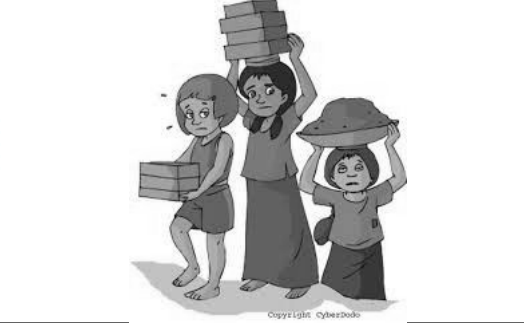
Study the Photo below and answer the questions that follow
Question
Question:
Do you agree that children under a certain age should not work? Substantiate the answer.
The issue of child labour is a serious concern, especially in developing countries. In South Africa, specific laws are in place to protect children from exploitation and ensure their development is not hindered by premature work responsibilities. Understanding these legal frameworks helps us appreciate why children under a certain age should not be allowed to work.
Yes, I fully agree that children under a certain age should not work. This position is strongly supported by the Basic Conditions of Employment Act (BCEA) of 1997, which plays a vital role in protecting the rights and welfare of South African children. According to this legislation, no one under the age of 15 may be employed in South Africa. This legal boundary ensures that young children are not exploited or exposed to harmful working conditions during their formative years.
Furthermore, the BCEA extends this protection by stating that if children are younger than the compulsory school-leaving age, they are not allowed to work under any circumstances. This legal provision emphasizes the importance of education as a fundamental right and acknowledges that the developmental needs of children—both intellectually and socially—must take precedence over labour. By keeping young children out of the workforce, society ensures they can focus on schooling and personal growth without undue stress or distraction.
Even when a child is older than 15, the law still imposes crucial conditions to safeguard their wellbeing. A child may only be employed if the job is clearly suitable for a person of their age. This means the nature of the work must be appropriate in terms of both physical and emotional demands. It would be completely unethical and harmful to place a 15-year-old in a role that is designed for an adult, particularly if it involves heavy labour, exposure to dangerous equipment, or responsibilities beyond their maturity level.
In addition to age suitability, any work done by a child over 15 must not pose a risk to the child’s wellbeing, education, physical or mental health, or spiritual, moral, or social development. This comprehensive protection reflects an understanding that child labour can have long-term negative effects. It can hinder educational progress, impair emotional development, and even lead to physical injuries or trauma. Ensuring that work does not interfere with these critical areas of a child’s life is essential to their overall development and future opportunities.
In conclusion, the prohibition of employment for children under 15—and the strict regulations for those just above that age—is not only a legal necessity, but also a moral and developmental imperative. It protects children from exploitation, supports their right to education, and nurtures their physical, mental, and emotional wellbeing. Therefore, allowing children under a certain age to work would be both irresponsible and detrimental to their future. The BCEA serves as a necessary shield to ensure that all children in South Africa are given the opportunity to grow, learn, and thrive in a safe and supportive environment.
Question:
Discuss the purpose of the BCEA.
The Basic Conditions of Employment Act (BCEA) is a critical piece of legislation in South Africa, designed to regulate the working conditions of employees. Its overarching purpose is to strike a balance between advancing economic development and ensuring social justice, fostering a more equitable and productive society. The Act serves as a safeguard for workers’ rights, promoting fair and safe working conditions, while also supporting the country’s broader economic growth.
One of the primary goals of the BCEA is to advance economic development and social justice. This dual objective is essential for creating a stable and sustainable labour market. Economic development within the context of the BCEA encourages businesses to grow and prosper, while ensuring that employees are not exploited in the process. At the same time, social justice is a core pillar, aiming to protect the rights of workers and ensure that their dignity is upheld within the workplace.
The BCEA’s contribution to economic development can be seen in its role in promoting a higher standard of living and better health for the workforce. By setting out minimum wage standards, regulating working hours, and enforcing adequate rest periods, the Act ensures that employees are not overworked or underpaid. This not only benefits the workers themselves but also the economy as a whole. A healthy, well-rested workforce is more productive and more likely to contribute positively to economic growth. When businesses comply with these conditions, they help foster an environment of long-term economic stability and prosperity.
Furthermore, the BCEA’s emphasis on social justice ensures that workers’ human rights are respected, particularly within the context of workplace safety and employee welfare. The Act establishes crucial workplace protections, including the right to a safe working environment, which reduces workplace accidents and improves overall health standards. By promoting these standards, the BCEA helps prevent exploitation and abuse, ensuring that employees are not subjected to unfair treatment, hazardous conditions, or unreasonable demands. This protection of workers’ rights is essential for creating a fair and just society where workers are valued and their contributions acknowledged.
Moreover, promoting the welfare of the employee goes beyond physical safety to encompass mental and emotional well-being. The BCEA’s provisions for regular rest periods, paid leave, and fair termination procedures provide workers with the necessary time and conditions to maintain a balanced life. When employees feel that their welfare is prioritized, they are more likely to be motivated and loyal, further contributing to the growth of the economy.
In conclusion, the BCEA serves as a comprehensive legal framework that not only ensures fair treatment of employees but also fosters an environment that promotes economic growth. By advancing both economic development and social justice, it ensures that progress does not come at the expense of workers’ rights. In this way, the BCEA helps to build a more balanced, productive, and just society, where both businesses and employees can thrive together.
Question
List SEVEN functions of labour inspectors.
Labour inspectors play a critical role in ensuring that workplaces operate within the legal framework set by employment legislation. Their roles include
Promoting, Monitoring, and Enforcing Employment Laws
One of the primary functions of labour inspectors is to promote, monitor and enforce laws that govern employment conditions. These laws include those related to working hours, minimum wages, leave entitlements, and occupational health and safety standards. By actively engaging with employers and employees, labour inspectors ensure that the workplace remains compliant with current labour legislation. This role is crucial in maintaining fair labour practices and preventing exploitation or abuse within the workplace.
Advising Employees on Their Legal Rights and Responsibilities
Labour inspectors are also responsible for advising employees on their rights and obligations in terms of employment laws. This function ensures that workers are fully aware of the protections they are entitled to and the duties they must uphold in their employment relationships. For example, an inspector may explain to an employee their right to annual leave or guide them on how to report unfair dismissal. This educational role strengthens employee empowerment and promotes lawful behaviour in the workplace.
Conducting Routine and Unannounced Inspections
A fundamental duty of labour inspectors is to conduct inspections at workplaces to verify compliance with labour regulations. These inspections may be routine or triggered by specific complaints. During inspections, inspectors examine various employment records, interview staff, and observe working conditions to assess whether legal standards are met. This function helps identify and address issues such as unpaid wages, unsafe working environments, or excessive working hours.
Investigating Complaints from Employees or the Public
Labour inspectors are mandated to investigate complaints regarding labour law violations. These complaints can be lodged by employees, trade unions, or even members of the public. Investigations typically involve gathering evidence, interviewing witnesses, and compiling reports to determine whether an employer has breached any employment law. Through this process, inspectors play a critical role in addressing grievances and enforcing workplace justice.
Securing Compliance with Employment Law
Another key function is to secure compliance with employment law. This means that inspectors do not merely identify violations—they also take steps to ensure that employers rectify non-compliance. This may involve issuing compliance orders, recommending corrective action, or initiating legal proceedings where necessary. The objective is not only to penalize wrongdoers but to promote a culture of accountability and adherence to the law across all sectors.
Protecting Employees Against Discrimination
Labour inspectors work to protect employees against discrimination in the workplace. This includes monitoring hiring practices, remuneration systems, promotion procedures, and termination policies to ensure fairness and equality. Inspectors help identify forms of discrimination based on race, gender, disability, religion, or other prohibited grounds. Their efforts support a more inclusive and just workplace environment for all employees.
Inspecting, Copying, and Removing Employment Records
Lastly, labour inspectors have the authority to inspect, copy and remove records that are relevant to their investigations or inspections. These records may include payslips, attendance registers, employment contracts, and disciplinary documents. Having access to such documentation allows inspectors to build solid evidence for compliance assessment or legal proceedings. This function is essential in enforcing transparency and accountability in labour practices.
Question
Give EIGHT reasons for the statutory control of labour relations in the workplace.
Statutory control of labour relations in the workplace plays a crucial role in ensuring fairness, maintaining structure, and upholding legal standards. The following are the key reasons why such control is necessary to support a balanced and effective working environment.
1. Workplace Order and Stability
Statutory control is essential to maintain order in the workplace, as it sets clear guidelines that govern the behaviour, roles, and responsibilities of all employees and employers. Without these legal structures, misunderstandings and conflict could easily arise, disrupting productivity and creating a hostile work environment. Order ensures that everyone knows what is expected of them, and it helps prevent actions such as unfair dismissals, discrimination, or unsafe practices.
Example: If a worker is unfairly dismissed, labour laws like the Labour Relations Act (LRA) in South Africa provide a legal channel for dispute resolution, thereby maintaining peace and order in the workplace.
2. Defining Labour Relationship Boundaries
The purpose of statutory control is also to establish parameters for conducting a labour relationship. This involves setting clear boundaries that define how employees and employers interact. These legal frameworks outline the roles, rights, and duties of each party and help prevent exploitation or abuse.
Example: An employment contract that includes clauses on job responsibilities, working hours, and disciplinary procedures helps both employer and employee understand their limits and obligations, thereby reducing conflict.
3. Minimum Substantive Conditions
Labour legislation plays a critical role to lay down minimum conditions with regard to substantive conditions of employment. This refers to the essential terms such as wages, leave days, working hours, and overtime pay. These minimums ensure that all workers receive fair and humane treatment regardless of their job role or industry.
Example: The Basic Conditions of Employment Act (BCEA) in South Africa specifies that workers must receive at least 21 consecutive days of paid annual leave, ensuring that no employee is overworked or denied rest.
4. Enforcing Employment Contracts
A key function of statutory control is to enforce the contract of employment. Legal intervention ensures that both parties uphold the terms they agreed upon when the contract was signed. If either side breaches the contract, there are legal remedies available through statutory mechanisms.
Example: If an employer fails to pay an agreed-upon salary, the employee can lodge a complaint with the Commission for Conciliation, Mediation and Arbitration (CCMA), which has the power to enforce the contract.
5. Promoting Fairness and Equality
Another important reason for legal control in labour relations is to ensure fairness or equality in the workplace. Statutory laws protect against unfair labour practices and discrimination, making it possible for all employees to work under equal conditions regardless of gender, race, or background.
Example: Employment Equity legislation promotes equal opportunities and affirmative action, ensuring that previously disadvantaged groups have access to fair employment opportunities.
6. Dual Protection for Workers and Employers
Labour law is designed to ensure protection of both employers and employees, creating a balanced and functional work environment. It shields employees from abuse or exploitation while also defending employers against misconduct, theft, or poor performance.
Example: An employer can follow a legal disciplinary procedure before dismissing an employee, while an employee has the right to defend themselves, ensuring mutual protection and accountability.
7. Enforcing Minimum Employment Standards
One of the primary roles of statutory control is to implement legislation on minimum terms and conditions of employment, which ensures that all workers, regardless of sector or seniority, receive a basic standard of treatment. These standards prevent employers from undercutting workers’ rights in pursuit of profit.
Example: Minimum wage laws ensure that no employee is paid less than the legal standard, promoting economic fairness and reducing poverty.
8. Preventing Labour Disputes
Labour legislation exists to prevent and resolve disputes in the workplace. By providing official channels and protocols for handling grievances, the law promotes stability and a cooperative work environment. This ensures that disagreements do not escalate into strikes, sabotage, or legal battles.
Example: Institutions like the CCMA in South Africa are in place to mediate between employers and employees, helping to settle disputes peacefully without the need for costly and prolonged litigation.
Read and answer the following questions
WHEN ROLES COLLIDE: HOW DO HOSTILITIES BREAK OUT?
We both worked in advertising. She was very fun, productive and efficient – the kind of person you meet and think, ‘This person’s really good at their job’.
Then the evil side started showing. I’d never met anyone like that before.
It started with the usual stuff you hear about – undermining people, talking over people in meetings, and taking ownership of people’s ideas. But then she started saying to everyone in the team, ‘I’m your boss’, even though she definitely wasn’t our boss.
One time she was at Friday afternoon drinks on the balcony at work, and she went on this huge rant about ‘her’ team, and she started calling all of us her ‘bitches’.
One of the senior managers was there to tell her, ‘Um, you know that you’re not their boss.’
At the worst point, I completely hated coming to work. It was only after I left that I realised how exhausted and anxiety-ridden I was. She ended up quitting too.
Question
Give the causes of conflict in the workplace.
Conflict in the workplace can arise for a variety of reasons, and understanding these causes is crucial for creating a harmonious and productive environment. The following points below outline key factors that contribute to workplace conflict
1. Poor Management
Poor management is one of the most significant causes of conflict in the workplace. When managers fail to provide clear direction, support, or fairness, it can lead to frustration, confusion, and resentment among employees. A lack of effective leadership often results in a disorganized workplace where employees feel undervalued or ignored.
Example: If a manager continually changes project deadlines without clear communication or reasons, employees may feel like their time and effort are being disrespected, which can lead to tension and poor morale.
2. Unfair Treatment
Unfair treatment creates deep conflict in any organization. When employees perceive that they are being treated unjustly or unequally, whether due to favoritism, discrimination, or bias, it erodes trust and cooperation. Employees who feel overlooked or mistreated are more likely to become disengaged, resentful, or even confrontational.
Example: If one employee consistently receives praise or promotion opportunities, while others with similar or better qualifications are overlooked, it can breed feelings of animosity and division within the team.
3. Unclear Job Roles
Unclear job roles are a major source of workplace conflict. When job responsibilities and expectations are not clearly defined, employees may experience confusion about what is expected of them, leading to mistakes, missed deadlines, and interpersonal conflict. Without clear role definitions, overlapping duties or unmet expectations can lead to misunderstandings and disputes.
Example: Two employees might feel that their tasks overlap or that they are responsible for the same project, causing frustration and friction when neither of them is sure who is truly in charge of a particular aspect.
4. Inadequate Training
Inadequate training can cause conflict when employees feel unprepared or unsupported in their roles. If workers are not given the proper skills or knowledge to succeed, they may struggle with their tasks, leading to mistakes, stress, and a sense of incompetence. This often leads to frustration between workers and management, especially if the issues are blamed on the individual rather than the lack of adequate training.
Example: An employee who is given a new software system to use but has not been trained properly may struggle with the system, leading to errors that could have been prevented with proper guidance, and causing frustration within the team.
5. Poor Communication
Poor communication is a critical cause of conflict in the workplace. When there is a breakdown in communication between management and employees, or among employees themselves, it can result in misunderstandings, confusion, and missed opportunities. Lack of clear, consistent information leads to mistakes, confusion about priorities, and a sense of alienation.
Example: If a manager communicates project updates to some team members but not others, those left out may feel excluded or left behind, leading to resentment and mistrust.
6. Poor Work Environment
A poor work environment can significantly contribute to conflict. When the physical or psychological atmosphere at work is uncomfortable, stressful, or toxic, employees can become unhappy and disengaged. Factors such as lack of cleanliness, noise, uncomfortable seating, or even negative workplace culture can all negatively impact relationships and productivity.
Example: A poorly lit, noisy office with uncomfortable seating arrangements might make employees feel physically stressed, while a negative atmosphere created by gossip or high levels of tension can lead to interpersonal conflicts.
7. Lack of Equal Opportunities
Lack of equal opportunities is a major cause of conflict, particularly when employees feel that their potential for advancement is limited due to bias or systemic inequality. Whether it relates to promotions, raises, or professional development, when opportunities are not equally available to all employees, it leads to feelings of resentment, division, and frustration.
Example: If employees in a specific department are consistently overlooked for promotion opportunities in favor of others with less experience or qualifications, the team may experience frustration and a sense of injustice, leading to conflicts.
8. Bullying and Harassment
Bullying and harassment are serious causes of conflict in the workplace. When employees experience or witness bullying, whether physical, verbal, or emotional, it creates a hostile environment that can lead to high turnover, low morale, and even legal action. Harassment undermines trust, respect, and collaboration, and can cause employees to feel unsafe or undervalued.
Example: An employee who is repeatedly belittled or mocked by a coworker or supervisor may begin to dread coming to work, leading to conflict between the victim and the perpetrator, as well as between management and employees who expect intervention.
9. Significant Changes to Products, Organisational Charts, Appraisals or Pay Systems
Significant changes to products, organisational charts, appraisals, or pay systems can cause confusion and conflict when they are not communicated effectively. Employees may feel insecure or uncertain about their future if they are faced with sudden changes in their roles, responsibilities, or compensation. These types of changes often disrupt the stability of the workplace and can lead to anxiety, resistance, and even rebellion.
Example: A company that suddenly changes its pay structure without clear explanations may cause employees to feel that their hard work is not being adequately compensated, leading to dissatisfaction and potential protests or resignations.
Question
Give the main reasons for trade union development.
Trade unions have developed over time as a response to various pressures faced by workers in the workplace. The points below highlight the main reasons for the growth of trade unions
1. Conditions of the Working Class
The conditions of the working class played a significant role in the development of trade unions. In the early stages of industrialization, workers often faced harsh conditions, long hours, and minimal pay. These poor working conditions led to widespread dissatisfaction and a desire for collective action to improve their circumstances. Workers needed a voice to represent their interests and fight for better treatment, which became the driving force behind the formation of trade unions.
Example: In factories, workers were often subjected to dangerous machinery without proper safety measures, leading to injuries and fatalities. This spurred the need for collective bargaining to ensure safer working environments.
2. Divorce of Employees from Owners
The divorce of employees from owners refers to the growing separation between the workers who produced goods and the owners who profited from them. As industries grew, workers were seen as mere cogs in the machine, with little or no connection to the decision-making processes of the business. This disconnect led workers to seek representation and solidarity through trade unions, which allowed them to collectively challenge the power imbalance and advocate for their rights.
Example: In large factories, employees might work in isolation from the owners, who were often removed from the day-to-day struggles of the workforce. This lack of communication and empathy encouraged workers to form unions to ensure their concerns were heard.
3. Poor Working Conditions and Wages
Poor working conditions and wages were among the main drivers for the formation of trade unions. As industrialization progressed, many workers found themselves working long hours for very low pay in unsafe or unsanitary environments. Unions formed as a way to demand fair wages, safer working conditions, and reasonable working hours. By banding together, workers believed they could increase their bargaining power and secure better terms from employers.
Example: In coal mines, workers often labored in unsafe conditions with inadequate pay. The formation of unions helped workers negotiate for safer equipment, fairer wages, and reasonable work hours.
4. Mass Production and Division of Labour
The rise of mass production and division of labour significantly altered the workplace, and in turn, created the need for trade unions. As industries expanded, tasks were divided into smaller, repetitive roles, leading to monotonous work and a sense of dehumanization among workers. The specialization of labor often led to exploitation, as workers were treated as interchangeable parts. Unions became a tool for workers to collectively demand better conditions in this new era of mass production.
Example: In automobile factories, workers were assigned specific tasks on assembly lines, which made their roles more repetitive and less fulfilling. Unions helped workers negotiate for more meaningful work and better compensation.
5. Independence of Discipline
Independence of discipline refers to the ability of workers to ensure their rights and interests are respected without being subjected to arbitrary discipline or unfair treatment by employers. In the absence of unions, workers had little recourse against unjust treatment. The development of trade unions allowed workers to establish clear rules for discipline, grievance procedures, and fair treatment. Unions provided workers with the support needed to challenge unfair actions and defend their rights.
Example: A worker wrongly accused of negligence might face harsh punishment or even dismissal without the means to defend themselves. Trade unions provided the collective power and legal representation to challenge such decisions.
6. Economic Insecurity and Dependence
Economic insecurity and dependence on employers for wages drove workers to form unions in order to protect their financial well-being. Workers often relied on a single employer for their livelihood, which made them vulnerable to wage cuts, layoffs, or exploitative conditions. By joining together in a union, workers gained the collective strength to negotiate better pay, job security, and protection from exploitation.
Example: During economic downturns, workers might face job cuts or pay reductions. Unions gave workers the power to negotiate for severance packages, unemployment benefits, or the protection of their jobs.
7. Class System
The class system in society also contributed to the development of trade unions. As the gap between the rich and poor grew, workers recognized the need to challenge the dominance of the upper class, particularly in the workplace. The class disparity between workers and employers often resulted in unfair treatment and exploitation. Unions emerged as a means for workers to fight against the entrenched social hierarchy and push for a more equitable distribution of wealth and resources.
Example: The industrial revolution saw the rise of wealthy factory owners who amassed significant profits, while workers struggled with poor wages. Trade unions helped workers advocate for a fairer share of the economic prosperity created by their labor.
Question
Give the qualities of a shop steward.
A shop steward plays a critical role in representing employees in the workplace and maintaining a balanced relationship between workers, management, and the union. To be effective in this role, a shop steward must possess the following key qualities that enable them to lead, communicate, and advocate fairly and responsibly.
1. Respected and Trusted by All Parties
A shop steward must have the respect and trust of the union, employees and management to function effectively in the workplace. This quality ensures that the steward is seen as a credible and reliable representative who can fairly represent workers’ concerns while maintaining productive relationships with both union officials and management. Trust is earned through consistent fairness, professionalism, and integrity.
Example: When a dispute arises over working hours, a respected shop steward is more likely to be heard and trusted by both the employer and employees, making it easier to mediate a fair solution.
2. Effective Communication Skills
A successful shop steward must be an effective communicator. This includes not only the ability to speak clearly and confidently, but also the capacity to listen actively and understand the perspectives of others. Communication is essential when conveying workers’ concerns to management, explaining union policies, or addressing grievances.
Example: During a wage negotiation, an effective communicator can present workers’ demands in a respectful, persuasive, and professional manner that enhances the chances of reaching a fair agreement.
3. Objective Judgement
A shop steward must be able to make objective judgements. This means putting personal feelings aside and making decisions based on facts, fairness, and the best interests of the group. Objectivity ensures that all employees are treated equally and fairly, regardless of personal relationships or opinions.
Example: If two employees are in conflict and both claim unfair treatment, an objective shop steward will assess the situation without bias, investigate the facts, and advocate for a just resolution.
4. Quick Decision-Making Ability
A shop steward should be able to make quick decisions, especially in high-pressure or time-sensitive situations. This skill is important in cases of sudden disputes, safety concerns, or emergency negotiations, where delays could worsen the issue or put employees at risk.
Example: If a worker is suddenly suspended without warning, the steward may need to act quickly to gather information and intervene to ensure the employee’s rights are protected.
5. Committed, Diligent, and Fair
An ideal shop steward must be committed, diligent and fair minded. Commitment refers to consistently standing up for workers’ rights, diligence involves staying informed and proactive, and fairness ensures that decisions are made with integrity and justice. These traits build long-term trust and reinforce the steward’s role as a dependable leader.
Example: A committed steward attends union meetings regularly, follows up on unresolved issues, and ensures that all workers are treated with fairness regardless of their rank or background.
6. Knowledge of Trade Union and Management Affairs
A shop steward must have knowledge of trade union and management affairs to effectively navigate disputes and negotiations. This includes understanding union rules, labor laws, company policies, and workers’ rights. With this knowledge, the steward becomes a valuable resource for both employees and management when addressing workplace concerns.
Example: If an employer tries to implement a policy change without following proper procedures, a knowledgeable steward can point out the violation and demand that the correct process be followed.
Question
Give the duties of a shop steward.
A shop steward serves as the crucial link between employees, the trade union, and management, ensuring fair representation and smooth workplace communication. To fulfill this role effectively, a shop steward must carry out the following responsibilities to uphold the union’s goals and protect workers’ rights.
1. Participation in Local Union Branches
A key duty of a shop steward is to be involved in local union branches. This involvement allows the shop steward to stay updated on union strategies, policies, and collective decisions. Active participation ensures that the steward is aligned with union leadership and can accurately represent union positions at the workplace level.
Example: A shop steward regularly attends local branch meetings where wage negotiations and labor law updates are discussed, enabling them to share this crucial information with employees and act accordingly in workplace matters.
2. Recruiting New Members
One of the vital responsibilities of a shop steward is to recruit new members into the union. This helps strengthen the union’s presence and influence in the workplace, giving employees a stronger collective voice. Recruitment also ensures that new employees understand the benefits and protections provided by union membership.
Example: When a group of new workers joins a company, the steward takes time to introduce them to the union, explain membership benefits, and guide them through the joining process.
3. Collecting Union Dues
It is the responsibility of a shop steward to collect dues from union members. These dues are critical for funding union activities, legal support, negotiations, and member services. A shop steward ensures dues are collected on time and properly documented, maintaining financial accountability within the branch.
Example: At the beginning of each month, the steward distributes notices for dues collection, receives payments, and submits them with a report to the local union office.
4. Promoting Participation in Union Activities
A shop steward is expected to encourage fellow employees to participate in branch activities. This includes union meetings, training workshops, strikes, or awareness campaigns. Participation helps foster solidarity, shared responsibility, and better understanding of workplace rights.
Example: The steward may rally colleagues to attend a labour law awareness workshop or take part in a collective bargaining planning session to ensure everyone’s voice is heard.
5. Reporting Workplace Problems to the Union
An essential duty is to inform the trade union about problems and development at the workplace. The shop steward acts as the eyes and ears of the union by identifying grievances, potential disputes, or any violations of workers’ rights. This proactive communication helps the union respond appropriately.
Example: If employees report being forced to work overtime without pay, the steward informs the union, which can then intervene or take legal steps to resolve the issue.
6. Communicating Management’s Decisions
A shop steward must also communicate the decisions and plans of management to employees. Serving as a communication bridge, the steward ensures that changes in policies, schedules, or company procedures are accurately relayed to all workers to avoid misunderstandings and confusion.
Example: When management decides to revise leave policies, the steward shares the details during a team briefing, answers questions, and ensures that every employee understands the new rules.
7. Organising and Attending Union Meetings
Another important duty is to organise and attend trade union meetings. This ensures that members stay informed about union activities, current issues, and upcoming negotiations. The steward facilitates discussions and gathers feedback to represent employees effectively at higher levels.
Example: Before a major strike vote, the steward arranges a meeting where members can discuss the issues at hand, voice their opinions, and understand the consequences of the decision.
Question
Give the rights of a shop steward.
Shop stewards play a critical role in maintaining a balanced and fair working environment. Their rights below enable them to effectively represent workers, enforce agreements, and ensure the smooth functioning of employee-management relations.
1. Participation in Negotiations and Representation at National Congresses
Shop stewards have the right to take part in negotiations and act as a delegate to the national congress. This role allows them to represent their union branch at the national level, ensuring that the voices of local employees are heard in broader discussions. It also gives them a platform to influence labor policies and union decisions that affect workers across sectors.
Example: A shop steward might attend the national congress to present grievances regarding unsafe working conditions in their region, contributing to national policy changes on workplace safety.
2. Ensuring Employees Receive Negotiated Benefits
One of the essential rights of a shop steward is to ensure employees receive negotiated benefits. This includes overseeing that any agreements made between the union and management—such as bonuses, leave days, or improved working conditions—are honored and implemented correctly.
Example: If a collective agreement includes an annual uniform allowance, the shop steward ensures that every eligible worker receives it on time.
3. Enforcement of Agreed Procedures
Shop stewards have the authority to ensure that agreed procedures are followed. This right empowers them to hold both management and workers accountable to the company’s procedures and policies, especially those agreed upon through collective bargaining.
Example: If a disciplinary process skips mandatory steps outlined in the grievance policy, the shop steward can intervene and demand that the proper procedure be followed to protect the worker’s rights.
4. Representation at Disciplinary Hearings and Grievances
Shop stewards are entitled to represent members at disciplinary hearing and grievances. They serve as advocates during these proceedings, ensuring fair treatment, providing support, and helping employees understand their rights and responsibilities.
Example: A shop steward may speak on behalf of a worker during a disciplinary hearing where the worker feels unfairly accused, helping clarify the issue and reduce potential bias.
5. Acting as a Mouthpiece for General Complaints
Another important right is to act as a mouthpiece for general complaints. The shop steward communicates workers’ concerns to management and strives to resolve issues before they escalate. This includes both individual and group concerns about workplace practices, conditions, or policies.
Example: When multiple employees complain about broken equipment in the factory, the shop steward raises this concern with the relevant manager to ensure timely repairs and a safer work environment.
Read and answer the following questions
Trade unions are independent organizations that act as representatives for employees in relation to their employers. By joining a trade union, you become part of a group that advocates for your interests, negotiating key workplace matters such as salary, working hours, and other employment conditions on your behalf.
Question
Give the objectives of trade unions.
Trade unions play a vital role in safeguarding the rights and improving the conditions of workers. The following trade union objectives serve as a framework for promoting fairness, equality, and improved workplace standards.
1. To Protect and Further the Interests and Welfare of Members
The primary objective of trade unions is to protect and further the interests and welfare of members. This involves advocating for workers’ rights, negotiating better working conditions, and securing fair wages. Unions are dedicated to improving the overall quality of life for their members.
Example: A trade union may negotiate for better healthcare benefits, paid leave, and safety measures, ensuring that all workers enjoy a better standard of living and working conditions.
2. To Strive for Economic and Social Justice
Another objective of trade unions is to strive for economic and social justice. Unions advocate for equal pay, fair treatment, and opportunities for all workers, regardless of gender, race, or background. They challenge systemic inequalities and work toward achieving a just and equitable society for all members.
Example: A union may campaign for equal pay for women and men in the same roles, working to eliminate gender-based wage gaps in the workplace.
3. To Resist Retrenchment and Strive for Full Employment
Trade unions seek to resist retrenchment and strive for full employment. By negotiating with employers, unions aim to minimize layoffs, retrenchments, and ensure job security for their members. They often push for policies that foster full employment and prevent unnecessary job losses.
Example: A union might negotiate with management to implement a retraining program instead of laying off employees during a downturn in business, preserving jobs.
4. To Establish and Maintain Collective Bargaining Mechanisms
An essential objective of trade unions is to establish and maintain collective bargaining mechanisms. These mechanisms allow unions to negotiate with employers on behalf of employees about wages, working hours, and other conditions. Collective bargaining helps ensure that employees have a unified voice in negotiations with management.
Example: A union negotiates for annual wage increases based on inflation and company performance, ensuring that workers’ salaries keep up with the cost of living.
5. To Ensure Democracy at the Workplace
Trade unions aim to ensure democracy at the workplace. This objective focuses on ensuring that workers have a say in the decisions that affect them, such as workplace policies, management practices, and safety regulations. It promotes transparency and worker participation in workplace governance.
Example: A union might advocate for regular employee meetings where workers can discuss issues and voice concerns about management decisions.
6. To Fight Racism and Sexism in the Workplace
Another crucial objective of trade unions is to fight racism and sexism in the workplace. Unions work toward creating an inclusive environment where all employees are treated fairly, regardless of their race or gender. They challenge discriminatory practices and promote equality.
Example: A trade union may take legal action against an employer who has been found guilty of gender-based discrimination or racial profiling in hiring practices.
7. To Promote, Support, and Unite Trade Unions
Trade unions aim to promote, support, and unite trade unions. This involves building solidarity among different unions, both within a country and internationally. By uniting various unions, trade unions strengthen their bargaining power and their ability to influence labor policies.
Example: A union may collaborate with other unions in the same industry to collectively negotiate with employers, leveraging their combined strength for better outcomes.
8. To Create Funds to Benefit Union Members
To create funds to benefit union members, such as provident, pension, and medical aid funds, is another key objective. These funds provide members with financial security, especially in times of illness, retirement, or unexpected hardships.
Example: A trade union might establish a pension fund to ensure that workers have financial support after they retire, providing long-term security.
9. To Provide Legal Assistance for Members in Relation to Their Employment
Trade unions are committed to providing legal assistance for members in relation to their employment. Unions offer support to employees in cases of disputes, disciplinary actions, or when their rights are violated in the workplace. Legal representation ensures that workers have the means to defend their rights effectively.
Example: A union might provide legal support to an employee who has been unfairly dismissed, helping them file a case for wrongful termination.
10. To Resolve Grievances and Bring These to the Attention of Management
Unions work to resolve grievances and bring these to the attention of management. When employees face issues, whether related to working conditions, pay, or personal disputes, the union serves as an intermediary to address these concerns and ensure that management responds appropriately.
Example: A union representative may take a grievance regarding unsafe working conditions to management, negotiating improvements like enhanced protective gear or better safety protocols.
11. To Ensure Job Security and Income
Trade unions focus to ensure job security and income. By negotiating better employment contracts and advocating for workers’ rights, unions help protect workers from arbitrary job loss and income instability.
Example: A union negotiates severance pay and job protection clauses, ensuring that workers are financially supported if they lose their job through no fault of their own.
12. To Improve Physical Working Conditions and Safety
Trade unions aim to improve physical working conditions and safety. They advocate for a safer work environment, ensuring that proper safety measures are in place to protect workers from accidents and hazards.
Example: A union might negotiate for better ventilation and protective gear in a factory setting to reduce the risk of health problems among workers.
13. To Enforce Legislation/Agreements
Another objective is to enforce legislation and agreements. Unions work to ensure that employers adhere to labor laws and the terms of agreements made between unions and management.
Example: A union ensures that employers follow legally mandated overtime pay regulations and that workers are compensated fairly for extra hours worked.
14. To Ensure Solidarity with Trade Unions in Other Countries
Finally, trade unions aim to ensure solidarity with trade unions in other countries. By working together internationally, unions can address global issues, support workers facing similar challenges, and push for better working conditions worldwide.
Example: A trade union might express solidarity with workers in another country who are striking for better wages, offering financial or logistical support.
Question
Name and explain FIVE functions of trade unions.
Trade unions serve a wide range of functions aimed at improving the working lives of their members and advocating for their rights. The following are the five key functions of trade unions:
1. Power: To Protect and Support the Individual Through Collective Strength
One of the primary functions of a trade union is to protect and support the individual through collective strength. By uniting employees, unions can leverage the collective power of workers to negotiate better terms and defend against exploitation or unfair treatment. This collective strength ensures that individual workers have a stronger voice when facing employers.
Example: A single worker may have limited power when negotiating with management, but when joined by others in the union, they can collectively demand better pay or working conditions, making their collective voice more impactful.
2. Power: To Act as a Pressure Group Against the Employer
Trade unions also act as a pressure group against the employer. When necessary, unions apply pressure to employers through organized strikes, protests, or other collective actions to push for better conditions, fair pay, or address grievances. Unions use this power strategically to ensure that workers’ rights are not overlooked by management.
Example: In cases where management refuses to negotiate fair wages, a union may organize a strike, drawing attention to the issue and forcing the employer to engage in dialogue with the workers.
3. Economic Regulation: To Maximise the Wages and Employment of Members
Economic regulation is another important function of trade unions. Unions work to maximise the wages and employment of members by negotiating for higher wages, better benefits, and secure job opportunities. By bargaining collectively, unions ensure that members are compensated fairly for their labor and that their employment is stable.
Example: A union negotiates with management to secure higher hourly wages for workers in a manufacturing plant, ensuring that members are paid fairly based on the industry’s standards.
4. Job Regulation: To Establish a Joint Rule-Making System
Job regulation involves unions working to establish a joint rule-making system between workers and employers. This system sets clear guidelines for work processes, wages, promotions, and dispute resolution, ensuring that both workers and employers adhere to agreed standards and protocols. This structured approach helps prevent misunderstandings and conflicts in the workplace.
Example: A union and management agree on a clear set of rules regarding promotions and job evaluations, ensuring that all workers have an equal opportunity for advancement based on merit rather than favoritism.
5. Social Change: To Express Social Unity
Trade unions also play a significant role in expressing social unity. They often advocate for broader social changes that benefit not only workers but society as a whole. Unions push for equality, better living standards, and social justice, using their influence to bring about positive changes in both the workplace and the community.
Example: A union might campaign for policies that support paid family leave, contributing to broader societal changes that promote work-life balance for all workers, not just union members.
Question
Define the term employee.
An employee is a person who is hired by an employer and is compensated through wages or a salary in return for their work. This employment is based on the recognition that the employee possesses specific knowledge and skills that are needed by the organization.
The employee contributes their expertise, time, and effort to perform tasks and responsibilities as agreed upon in a contract or work arrangement. In return, the employer provides financial compensation and often additional benefits.
Therefore, an employee is not only someone who works for pay, but also someone whose skills and knowledge are essential to fulfilling the needs and objectives of the employer.
Question
Discuss the influence of various role players on the labour relations system in South Africa.
The labour relations system in South Africa is shaped by the dynamic interaction between key roleplayers, each exerting a unique influence on the structure, practices, and direction of labour relations. These roleplayers include the state, employers, employees, and notably, trade unions — all of whom are critical to maintaining a balanced, fair, and effective system of industrial relations.
The state plays a central role in shaping the labour relations framework through legislation, oversight, and active engagement. South Africa’s government is part of a tripartite alliance involving the state, business, and organised labour (trade unions), allowing for shared consultation and co-determination of labour policies. The state uses a mixed approach to involvement, which includes both enforcing labour laws and participating in dialogue with employers and workers through institutions like NEDLAC. This involvement ensures that policies are fair, inclusive, and aligned with the country’s socio-economic goals.
The employer exerts a strong influence on the labour system by focusing on job creation, participating in collective bargaining, and driving policy creation at the workplace. Employers determine organisational policies, employment conditions, and compensation structures. They engage with trade unions in bargaining councils or directly at company level to negotiate work-related agreements, making them crucial players in balancing economic performance with employee rights and welfare.
The employee, supported by trade unions, holds legal rights and practical influence in shaping the work environment. Employees provide essential labour and have the constitutional right to form and join trade unions, which amplifies their voice in workplace negotiations and national labour debates. Trade unions engage in collective bargaining and contribute to policy creation, advocating for employee interests, fair wages, job security, and improved working conditions. Their role is further enhanced by their integration into government dialogue platforms, ensuring that employee concerns are addressed in broader socio-economic planning.
Trade unions, therefore, play a dual role — they represent the collective voice of employees and act as a powerful force within the broader labour relations system. They challenge unfair labour practices, resist unjust retrenchments, push for equality in the workplace, and promote solidarity not just nationally but internationally. Their participation in bargaining processes and state consultations makes them a cornerstone of the democratic labour system in South Africa.
In conclusion, the collaboration between the state, employers, employees, and trade unions ensures that South Africa’s labour relations system remains robust, equitable, and responsive to change. Each roleplayer brings a unique perspective and set of responsibilities that contribute to the pursuit of industrial peace, economic development, and social justice.
Question
Briefly discuss the economic, political, legal and social inputs on labour relations.
The labour relations system is influenced by various key inputs that determine how employers and employees interact in the workplace. These include economic, political, legal, and social inputs. Each of these contributes in a specific way to shaping a stable and effective labour environment in South Africa.
Economic input is crucial to the strength of labour relations. A successful economy provides jobs to employees, which reduces unemployment and helps create stability in the workforce. When businesses are growing and making profits, they are more capable of offering fair wages and benefits. This creates a positive relationship between employers and employees, reducing disputes and strengthening cooperation.
Political input refers to state involvement, which plays an important role in shaping the labour system. The government can create laws to protect employees and implement policies to create jobs. Through legislation and economic planning, the state influences how employment is regulated and ensures that workers’ rights are respected. Political stability and the government’s commitment to labour justice are essential for fair and consistent treatment of workers.
Legal input forms the foundation of rights and responsibilities in the labour environment. Labour laws protect employees from unfair treatment, discrimination, and unsafe working conditions. These laws also provide guidelines for employers and help keep the peace in the labour system by ensuring that conflicts are resolved through proper legal procedures, such as through labour courts or dispute resolution bodies like the CCMA.
Social input plays a background but essential role in labour relations. Families and schools produce the employees needed to keep the labour relations system running. They do this by equipping individuals with the values, discipline, and skills needed in the workplace. A well-educated and socially responsible workforce contributes to more effective and fair labour relations, as workers understand both their rights and duties.
In conclusion, economic, political, legal, and social inputs each play a critical role in shaping the labour relations system. When these factors are managed effectively, they contribute to a fair, peaceful, and productive working environment for all role players.