
Grade 11 Life Sciences P1 – November 2025
Q&A Teaching Guide (Official Memo + Explanations)
SHOW ANSWER
Correct answer: A — Epiglottis
The epiglottis is a flap-like cartilaginous structure that closes over the opening of the trachea (glottis) during swallowing, preventing food from entering the airway.
SHOW ANSWER
Correct answer: C — Blood pH homeostasis
The kidneys help regulate blood pH by excreting hydrogen ions (H⁺) and reabsorbing bicarbonate ions (HCO₃⁻), maintaining the acid-base balance of the blood.
SHOW ANSWER
Correct answer: D — Small intestine
Villi are finger-like projections found in the small intestine that increase the surface area for efficient absorption of digested nutrients.
SHOW ANSWER
Correct answer: D — The concentration of oxygen in the blood is lower than in the alveoli
Oxygen moves from the alveoli (higher concentration) into the blood (lower concentration) by diffusion. This concentration gradient is essential for efficient oxygen uptake.
SHOW ANSWER
Correct answer: C
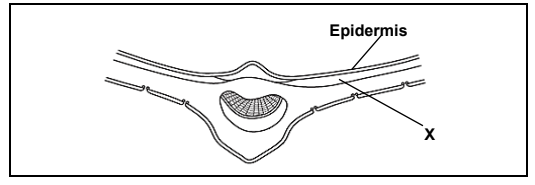
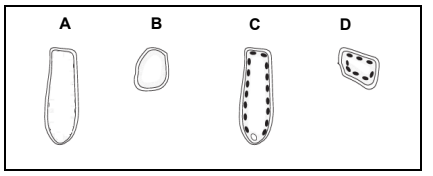
Layer X is the palisade mesophyll, which consists of elongated, column-shaped cells packed with chloroplasts to maximise light absorption for photosynthesis. Cell type C shows this typical elongated shape with many chloroplasts.
| AIR SAMPLE | O₂ % | CO₂ % | N₂ % |
|---|---|---|---|
| P | 21 | 0,04 | 78 |
| Q | 16 | 4,0 | 78 |
| R | 4 | 0,4 | 0 |
| S | 20 | 4,0 | 0 |
| INSPIRED AIR | EXPIRED AIR |
|---|---|
| A: S | R |
| B: P | S |
| C: P | Q |
| D: Q | S |
SHOW ANSWER
Correct answer: C — P (inspired) and Q (expired)
Inspired air (P) has a higher oxygen concentration (21%) and lower carbon dioxide concentration (0,04%). Expired air (Q) has less oxygen (16%) and more carbon dioxide (4,0%) because oxygen is used and carbon dioxide is produced during cellular respiration.
SHOW ANSWER
Correct answer: D — Hormones, urea and creatine
Tubular secretion is the process where substances such as hormones, urea, creatine, and certain drugs are actively transported from the blood into the renal tubule for excretion in urine.
SHOW ANSWER
Correct answer: B — Kidney → ureter → bladder → urethra
Urine is formed in the kidneys, passes through the ureters to the urinary bladder for temporary storage, and is then expelled through the urethra.
| UREA CONCENTRATION | RENAL TUBULE PERMEABILITY | URINE VOLUME | |
|---|---|---|---|
| A | Low | Permeable | High |
| B | High | Impermeable | Low |
| C | Low | Impermeable | Low |
| D | High | Permeable | High |
SHOW ANSWER
Correct answer: A — Low urea concentration, permeable renal tubule, high urine volume
When a person drinks a lot of water, the blood becomes dilute (low solute concentration). Osmoreceptors detect this, and less ADH is released. The renal tubules become less permeable to water (or impermeable), so less water is reabsorbed. This results in a large volume of dilute urine with low urea concentration.
SHOW ANSWER
Correct answer: C — Trap dirt and pathogenic (harmful) microbes (germs)
The cilia beat in a coordinated manner to move mucus, along with trapped dust, dirt, and pathogens, upwards towards the pharynx where it can be swallowed or coughed out. This helps keep the airways clean.
SHOW ANSWER
Breathing, also called ventilation, is the process of taking air into the lungs during inhalation and expelling air from the lungs during exhalation.
Breathing (ventilation) is the mechanical process of moving air into (inhalation) and out of (exhalation) the lungs.
SHOW ANSWER
Aldosterone
Aldosterone is secreted by the adrenal cortex and increases the reabsorption of sodium ions (Na⁺) from the renal tubules back into the blood, while promoting the excretion of potassium ions (K⁺).
SHOW ANSWER
Pre-molars and molars are large, broad teeth with uneven surfaces that help grind and crush food during mechanical digestion.
Pre-molars and molars have broad, flat surfaces with ridges that are adapted for grinding and crushing food, increasing the surface area for chemical digestion.
SHOW ANSWER
Pharynx
The pharynx (throat) is the common passageway for both air (from the nasal cavity to the larynx) and food (from the mouth to the oesophagus).
SHOW ANSWER
Secretion
Secretion is the process by which cells or glands release substances such as enzymes, hormones, or saliva for use elsewhere in the body.
SHOW ANSWER
Chyme
Chyme is the acidic, semi-fluid mixture of partially digested food and gastric juices that leaves the stomach and enters the small intestine.
SHOW ANSWER
Distal convoluted tubule
The distal convoluted tubule is the coiled section of the nephron that follows the loop of Henle and leads into the collecting duct. It is involved in the regulated reabsorption of ions and water.
SHOW ANSWER
Osmosis
Osmosis is the passive movement of water molecules through a selectively permeable membrane from an area of higher water potential (lower solute concentration) to an area of lower water potential (higher solute concentration).
| COLUMN I | COLUMN II |
|---|---|
| A: Thylakoid B: Lamellae |
SHOW ANSWER
Both A and B
Chlorophyll is located in the thylakoid membranes (A) which are stacked into grana, and also in the lamellae (B) that connect the grana. Both are part of the chloroplast's internal membrane system.
| COLUMN I | COLUMN II |
|---|---|
| A: Compound columnar B: Goblet |
SHOW ANSWER
B only
The surface of a villus is made up of simple columnar epithelium, which includes goblet cells (B) that secrete mucus. "Compound columnar" (A) is not a correct description of the villus surface.
| COLUMN I | COLUMN II |
|---|---|
| A: Circular muscle B: Epiglottis |
SHOW ANSWER
NONE
Neither circular muscle nor the epiglottis keeps the trachea open. The trachea is kept open by C-shaped rings of cartilage. Circular muscle would constrict the trachea, and the epiglottis is a flap that closes the airway during swallowing.
| COLUMN I | COLUMN II |
|---|---|
| A: Convoluted tubules B: Renal calyces |
SHOW ANSWER
NONE
Convoluted tubules (A) are part of the nephron, which is the functional unit of the kidney, not the blood circulatory system. Renal calyces (B) are part of the urine-collecting system, not the blood circulatory system. The blood circulatory system of the kidney includes the renal artery, renal vein, and the network of capillaries (glomerulus and peritubular capillaries).
SHOW ANSWER
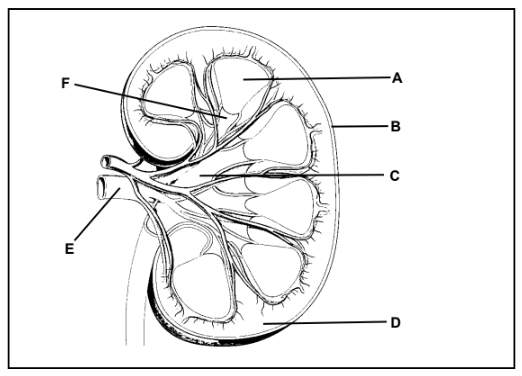
F — Renal calyx
The renal calyx is the cup-shaped structure that surrounds the renal papilla and collects urine as it drains from the collecting ducts.
SHOW ANSWER
B — Renal capsule
The renal capsule is the outer fibrous layer that surrounds the kidney and contains adipose tissue, which cushions and protects the kidney from mechanical shock.
SHOW ANSWER
C — Renal pelvis
The renal pelvis is the funnel-shaped cavity that collects urine from the major calyces and channels it into the ureter.
SHOW ANSWER
Part D, the renal medulla, appears darker red or brown because it contains more blood vessels than part A. Alternatively, part A, the renal cortex, appears lighter because it contains fewer blood vessels.
The renal medulla (D) contains the vasa recta and other blood vessels that give it a darker, reddish-brown appearance. The renal cortex (A) has fewer blood vessels and more nephron tubules, making it appear lighter in colour.
SHOW ANSWER
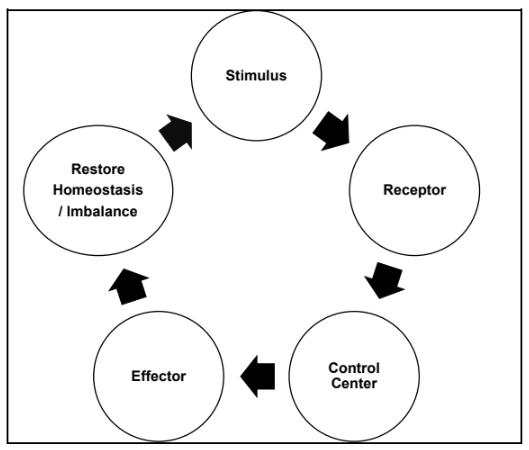
The body's ability to maintain a stable internal environment despite changes in the external environment.
Homeostasis ensures that internal conditions such as temperature, pH, water balance, and blood glucose concentration remain within narrow limits suitable for optimal enzyme activity and cell function.
SHOW ANSWER
Chemoreceptors of the carotid artery
Chemoreceptors in the carotid bodies (and aortic bodies) detect changes in blood CO₂ concentration and pH, sending signals to the respiratory centre in the medulla oblongata.
SHOW ANSWER
Intercostal muscles, diaphragm (respiratory muscles), heart
The intercostal muscles and diaphragm are the effectors that increase the rate and depth of breathing to expel excess CO₂. The heart may also increase its rate to transport blood gases more rapidly.
SHOW ANSWER
- When carbon dioxide accumulates in the blood, it reacts with water to form carbonic acid, causing the blood pH to fall and making the blood more acidic.
- High carbon dioxide levels interfere with normal cellular conditions and can reduce the efficiency of aerobic respiration, so cells may produce less ATP for their activities.
High CO₂ levels lower blood pH, which can denature enzymes and disrupt metabolic processes. Reduced aerobic respiration means less ATP is produced, impairing cellular functions and potentially leading to cell death.
SHOW ANSWER
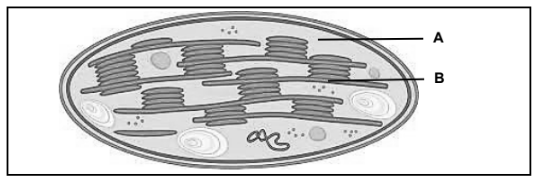
Chloroplast
The organelle shown has thylakoid membranes stacked into grana and a stroma, which are characteristic features of a chloroplast, the site of photosynthesis.
SHOW ANSWER
- The organelle contains stacks of disc-shaped thylakoids called grana, which are characteristic structures of chloroplasts.
- A fluid-filled region called the stroma surrounds the grana inside the chloroplast.
- Starch granules may also be visible because the chloroplast can store some of the carbohydrate produced during photosynthesis.
These internal membrane structures (thylakoids and grana) and the fluid stroma are unique to chloroplasts and are not found together in other organelles. Starch granules are also visible as stored carbohydrate products of photosynthesis.
SHOW ANSWER
| Light-dependent phase (B) | Light-independent phase (A) |
|---|---|
| This phase takes place in the thylakoid membranes and requires light energy. | This phase takes place in the stroma and does not use light directly. |
| Water is split during photolysis, releasing oxygen. | Carbon dioxide is used to build carbohydrate during the Calvin cycle. |
| ATP and NADPH are produced for use in the next phase. | ATP and NADPH from the light-dependent phase are used to help synthesise carbohydrates. |
The light-dependent phase (B) occurs in the thylakoid membranes and requires light to split water (photolysis), producing ATP, NADPH, and oxygen. The light-independent phase (A) occurs in the stroma, uses CO₂ and the products of the light phase to synthesise glucose through the Calvin cycle.
SHOW ANSWER
- Photosynthesis produces organic food, such as glucose, which supports the plant and provides energy and nutrients for heterotrophic organisms; this is why photosynthesis forms the basis of most food chains.
- Photosynthesis releases oxygen, which is required by many organisms for aerobic cellular respiration.
- Photosynthesis removes carbon dioxide from the environment and helps maintain the balance of carbon dioxide and oxygen in the atmosphere or aquatic environments.
Photosynthesis is essential for life on Earth because it converts light energy into chemical energy (glucose), forms the base of nearly all food chains, and releases oxygen as a by-product, which is needed for aerobic respiration.
SHOW ANSWER
The chloroplast contains many grana, thylakoids and lamellae, which provide a large surface area and hold chlorophyll to absorb radiant energy efficiently for photosynthesis. Alternatively, its fluid stroma allows the chemical reactions of the light-independent phase to take place and enables products of the light-dependent phase to be used in the next phase.
The extensive internal membrane system (thylakoids and grana) provides a large surface area for the light-dependent reactions of photosynthesis, while the stroma contains enzymes for the light-independent reactions.
GREENHOUSES HELP GROW FOOD EVEN WHEN THE WEATHER IS UNFAVOURABLE
In Russia, winters are very cold and the time for growing food is short. Greenhouses give a safe and warm space for growing vegetables all year round, even when it is −25°C outside. In places like Siberia, people can now grow local vegetables instead of buying them from other countries. Russian greenhouses use clean energy from the sun (solar) and the earth (geothermal). Greenhouses also help people get jobs and support local businesses.
SHOW ANSWER
- Greenhouses create jobs in rural areas and support the local economy.
- Greenhouses help grow local vegetables, so people don't have to import food.
- Greenhouses allow farmers to grow crops all year, even when it's cold.
Greenhouses provide economic and social benefits by creating employment, supporting local food production, and reducing dependence on imported vegetables.
SHOW ANSWER
Greenhouses use geothermal and solar energy, which reduces the need to use electricity from the local power grid and helps save costs.
By using renewable energy sources such as solar and geothermal heat, greenhouses minimise reliance on fossil-fuel-generated electricity, lowering operational costs and environmental impact.
SHOW ANSWER
- Use heaters, preferably powered by geothermal energy, to add heat to the greenhouse and maintain a suitable temperature for plant growth.
- Insulate the greenhouse with double walls or additional plastic layers so that less heat escapes to the cold surroundings.
Heaters actively add heat, while insulation reduces heat loss by conduction and convection, helping maintain the optimal temperature for plant growth.
SHOW ANSWER
Formula: (Difference ÷ Original) × 100
Substitution: ((28 − (−25)) ÷ 25) × 100
Working: (53 ÷ 25) × 100 = 2,12 × 100 = 212%
Final answer: 212% change
The temperature difference is 53°C. Expressed as a percentage of the original outside temperature (25°C), this is a 212% increase.
SHOW ANSWER
- As light intensity increases, the rate of photosynthesis usually increases because more light energy is available for the light-dependent reactions.
- This increase continues only until another factor, such as carbon dioxide concentration, temperature or enzyme activity, becomes limiting.
- Once a limiting factor prevents the rate from increasing further, the photosynthetic rate reaches a plateau even if light intensity continues to rise.
Light intensity is a limiting factor for photosynthesis. Initially, more light provides more energy for the light-dependent reactions, increasing the rate. However, once all chlorophyll and enzymes are saturated, further increases in light intensity have no effect.
SHOW ANSWER
At high light intensities, the chlorophyll molecules may already be absorbing as much light as they can use, so adding more light does not increase the rate of photosynthesis. The rate may also be limited by the availability or activity of enzymes involved in the light-independent reactions. As a result, the photosynthetic rate stops increasing even when light intensity rises further.
At high light intensities, the rate of photosynthesis plateaus because the amount of chlorophyll and the number of enzymes involved in the light-independent reactions become limiting factors.
SHOW ANSWER
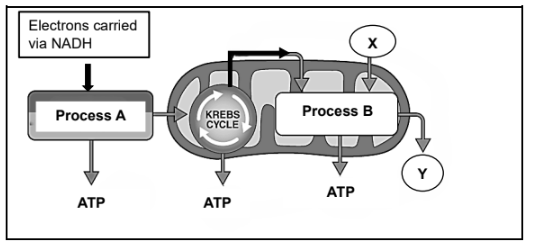
Glycolysis
Glycolysis is the first stage of cellular respiration, occurring in the cytoplasm, where glucose is broken down into pyruvic acid.
SHOW ANSWER
Oxygen
Oxygen is the final electron acceptor in the electron transport chain, allowing the process to continue and producing water.
SHOW ANSWER
Carbon dioxide
Carbon dioxide is released during the Krebs cycle as a waste product of cellular respiration.
SHOW ANSWER
Process A is catabolic because glucose is broken down into pyruvic acid. More specifically, one six-carbon glucose molecule is split to form two three-carbon pyruvic acid molecules.
Catabolic reactions involve the breakdown of larger molecules into smaller ones, releasing energy. Glycolysis breaks glucose down into pyruvic acid, so it is catabolic.
SHOW ANSWER
Process B produces more ATP than process A because oxygen acts as the final electron acceptor, allowing the electron transport chain to continue functioning. As a result, process B produces about 36 ATP molecules, whereas glycolysis in process A produces only 2 ATP molecules.
Process B is oxidative phosphorylation (electron transport chain), which produces the majority of ATP during aerobic respiration. Glycolysis (A) produces only a net gain of 2 ATP per glucose molecule.
SHOW ANSWER
The Krebs cycle takes place inside the mitochondrion and can proceed only when oxygen is available for aerobic respiration. During the cycle, carbon dioxide and high-energy hydrogen ions (H⁺) are released. The hydrogen atoms are then transported to the third stage of cellular respiration, where further ATP is produced.
The Krebs cycle (citric acid cycle) occurs in the mitochondrial matrix. It requires oxygen indirectly (as the final electron acceptor). Acetyl-CoA enters the cycle, and through a series of reactions, CO₂ is released, and hydrogen atoms are transferred to NAD⁺ and FAD to form NADH and FADH₂, which carry electrons to the electron transport chain.
SHOW ANSWER
During the marathon, the athlete’s muscles may not have received enough oxygen to maintain aerobic respiration. As a result, pyruvic acid was converted into lactic acid through lactic acid fermentation. The accumulation of lactic acid in the muscles contributed to the muscle cramps.
During intense exercise, oxygen supply to muscles cannot meet demand. Muscles switch to anaerobic respiration, where pyruvic acid is converted to lactic acid. The accumulation of lactic acid lowers muscle pH, causing fatigue and cramps.
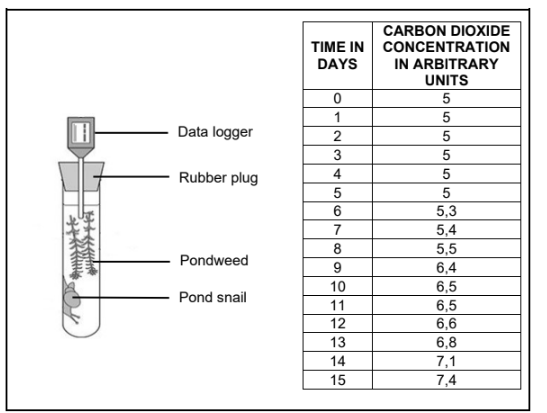
Experimental design:
- The apparatus was left in a well-lit room for 5 days.
- After 5 days, the scientist completely covered the boiling tube with black paper.
- A data logger was used to record carbon dioxide (CO₂) levels every day for 15 days.
- The results are shown in the table below.
| TIME IN DAYS | CARBON DIOXIDE CONCENTRATION IN ARBITRARY UNITS |
|---|---|
| 0 | 5 |
| 1 | 5 |
| 2 | 5 |
| 3 | 5 |
| 4 | 5 |
| 5 | 5 |
| 6 | 5,3 |
| 7 | 5,4 |
| 8 | 5,5 |
| 9 | 6,4 |
| 10 | 6,5 |
| 11 | 6,5 |
| 12 | 6,6 |
| 13 | 6,8 |
| 14 | 7,1 |
| 15 | 7,4 |
SHOW ANSWER
Carbon dioxide concentration (in arbitrary units)
The dependent variable is what is being measured in the experiment — here, the concentration of carbon dioxide recorded by the data logger.
SHOW ANSWER
A suitable control would be a second, otherwise identical apparatus set up under the same conditions but without the pondweed and pond snail. Comparing it with the experimental apparatus would help show whether the organisms are responsible for the change in carbon dioxide concentration.
A control is a standard against which the experimental results are compared. It ensures that any changes observed are due to the independent variable (presence of organisms/light) and not other factors.
SHOW ANSWER
From day 0 to day 5, the carbon dioxide concentration remained at 5 arbitrary units because the apparatus was kept in the light. During this period, the pondweed used carbon dioxide for photosynthesis while the pondweed and the snail also released carbon dioxide through respiration, so the processes balanced one another overall.
In the light, both photosynthesis and respiration occur. The CO₂ produced by the snail and pondweed during respiration is used up by the pondweed for photosynthesis, keeping the CO₂ concentration constant.
SHOW ANSWER
After day 5, the boiling tube was covered with black paper, preventing light from reaching the pondweed. Photosynthesis therefore stopped or decreased greatly, while cellular respiration continued in both organisms and released carbon dioxide into the water. As a result, the carbon dioxide concentration increased.
After day 5, the tube was covered with black paper, blocking light. Photosynthesis stopped, but respiration continued, releasing CO₂ and causing its concentration to increase.
SHOW ANSWER
The snail may have died because the pondweed could no longer photosynthesise in the darkness and therefore stopped releasing oxygen. The snail continued to use oxygen for cellular respiration, so the oxygen concentration may have fallen to a level too low to sustain it.
Without light, the pondweed could not produce oxygen. The snail and pondweed continued to respire, using up the remaining oxygen and releasing CO₂, which formed carbonic acid, lowering the pH and making the water uninhabitable.
SHOW ANSWER
The investigation shows that light availability affects carbon dioxide concentration in water containing pondweed and a pond snail. In the light, photosynthesis by the pondweed uses carbon dioxide, whereas in darkness photosynthesis stops but respiration continues to release carbon dioxide, causing its concentration to rise.
The investigation shows that in the presence of light, photosynthesis and respiration balance each other, keeping CO₂ levels stable. In darkness, photosynthesis ceases, and respiration causes CO₂ to accumulate.
SHOW ANSWER
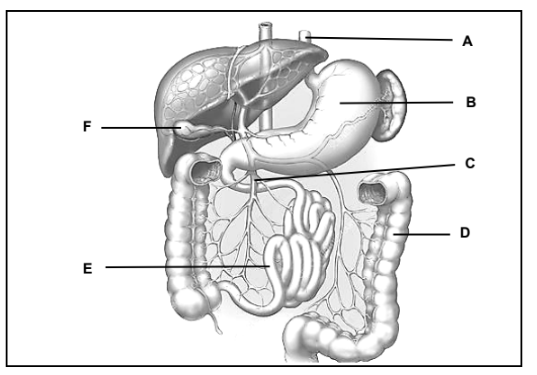
Oesophagus
The oesophagus is the muscular tube that connects the pharynx to the stomach, propelling food by peristalsis.
SHOW ANSWER
Hepatic portal vein
The hepatic portal vein carries nutrient-rich blood from the small intestine to the liver for processing and storage.
SHOW ANSWER
Structure E, the small intestine, is adapted for absorption in several ways. It is long and has circular folds and millions of villi, which greatly increase the surface area available for absorbing digested nutrients. It is richly supplied with blood vessels, allowing absorbed nutrients to be transported efficiently from the gut to the rest of the body. In addition, circular and longitudinal smooth muscles move food and indigestible material along the digestive tract.
Structure E is the small intestine. Its adaptations (length, folds, villi, rich blood supply, muscle layers, mucus) all serve to maximise the surface area and efficiency of digestion and absorption of nutrients.
SHOW ANSWER
Physical digestion in structure B, the stomach, occurs when its smooth muscle layers contract and churn the food, mixing it with gastric juices and breaking it into smaller pieces. Chemical digestion occurs at the same time when enzymes in the gastric juices act on the exposed food, breaking large, insoluble molecules such as proteins into smaller, soluble molecules such as peptides.
Structure B is the stomach. Physical digestion mechanically breaks food into smaller pieces and mixes it with gastric juices. Chemical digestion uses enzymes (e.g., pepsin) and acid to chemically break down nutrients into absorbable forms.
SHOW ANSWER
Fat absorption is still possible after structure F, the gall bladder, has been removed because bile is produced by the liver, not by the gall bladder. The bile can still enter the duodenum, where it emulsifies fats into smaller droplets and allows fat digestion and absorption to continue.
Structure F is the gall bladder. Even if the gall bladder is removed, the liver continues to produce bile, which flows directly into the duodenum to emulsify fats, allowing their digestion and absorption to continue.
SHOW ANSWER
- Digestion
- Proteases
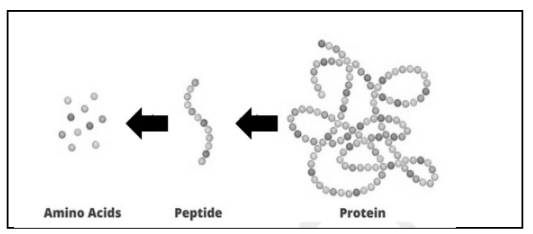
The diagram shows the breakdown of proteins into peptides and amino acids, which is digestion. Proteases are the enzymes that catalyse this hydrolysis.
SHOW ANSWER
Stomach
Pepsin is a protease produced in the stomach as pepsinogen and activated by hydrochloric acid. Other proteases are produced by the pancreas and small intestine.
SHOW ANSWER
Assimilation
Assimilation is the phase where absorbed nutrients (amino acids) are used to build new proteins and other substances needed by the body's cells.
SHOW ANSWER
The final phase of human nutrition is egestion. Undigested material passes through the colon, where most remaining water and mineral salts are absorbed. The undigested material is then stored temporarily in the rectum before it is expelled from the body through the anus.
Egression (egestion) is the elimination of undigested waste. The colon absorbs water and salts, the rectum stores faeces, and the anus expels them. This prevents toxic build-up and maintains homeostasis.
SHOW ANSWER
Mastication breaks large pieces of food into smaller pieces, making the food easier to swallow. It also increases the surface area of the food, allowing digestive enzymes to act on it more effectively.
Mastication (chewing) physically breaks food into smaller particles, increasing the surface area for enzyme action and lubricating the food with saliva to form a bolus for swallowing.
SHOW ANSWER
Bread contains starch. While the bread is being chewed, salivary amylase breaks the starch down into simpler sugars, including maltose, which has a sweet taste. Therefore, the bread begins to taste sweeter after it has been in the mouth for a short time.
Salivary amylase begins the chemical digestion of starch in the mouth, breaking it down into maltose, a disaccharide that has a sweet taste.
SHOW ANSWER
Diffusion
Diffusion is the passive movement of gases (O₂ and CO₂) from an area of higher concentration to an area of lower concentration across the alveolar membrane.
SHOW ANSWER
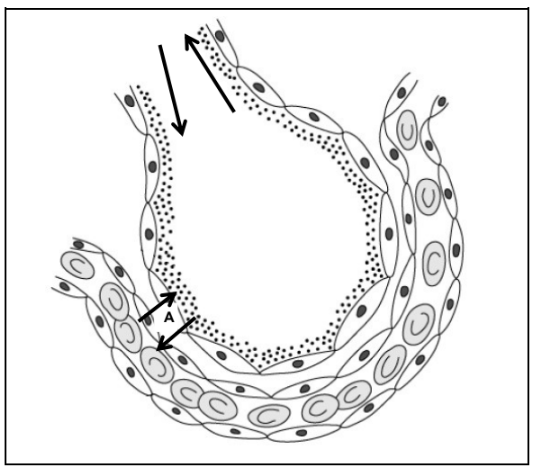
The alveolus has a wall that is only one squamous epithelial cell thick, so oxygen and carbon dioxide can diffuse across it over a very short distance. The surrounding blood capillaries also have walls that are only one cell thick, which further shortens the diffusion distance and allows gases to move efficiently between the air in the alveolus and the blood.
The alveolus has a very thin, moist surface and is surrounded by a dense network of capillaries. These features minimise the diffusion distance and maintain a steep concentration gradient for efficient gas exchange.
SHOW ANSWER
- As oxyhaemoglobin
- Dissolved within blood plasma
Most oxygen (about 98%) is transported bound to haemoglobin as oxyhaemoglobin. A small amount dissolves directly in the blood plasma.
SHOW ANSWER
A bullet wound to the chest may allow air to enter the pleural cavity, disrupting the negative pressure that normally keeps the lung expanded. The affected lung may then partially or completely collapse, so it cannot expand normally during inhalation. Consequently, less air enters the alveoli and ventilation becomes less effective. If the wound also damages lung tissue or blood vessels, bleeding and damage to the gas-exchange surface may further reduce oxygen uptake and carbon dioxide removal.
A bullet wound to the chest can cause a pneumothorax (collapsed lung) by allowing air into the pleural cavity. This disrupts the negative pressure needed for lung inflation, causing the lung to collapse and severely impairing ventilation.
SHOW ANSWER
A, B, C
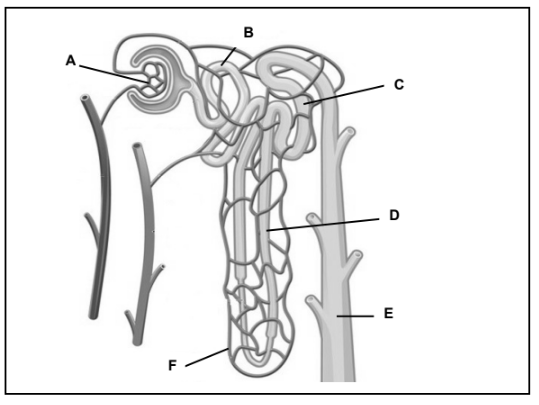
The renal cortex contains the glomerulus (A), Bowman's capsule (B), and the proximal and distal convoluted tubules (C). The loop of Henle (D) and collecting duct (E) extend into the medulla.
SHOW ANSWER
Two important processes occur between the renal tubule and the surrounding capillary network labelled F. During tubular reabsorption, useful substances and water move from the filtrate in the renal tubule back into the blood in the capillaries. During tubular secretion, waste products and toxins move from the blood in the capillary network into the renal tubule so that they can be removed in the urine.
Network F is the peritubular capillary network. Tubular reabsorption returns useful substances (glucose, amino acids, water, ions) to the blood, while tubular secretion removes waste products (urea, creatine, drugs) from the blood into the tubule for excretion.
SHOW ANSWER
The part most likely to be affected is the ascending limb of the loop of Henle, where sodium ions are normally reabsorbed from the filtrate.
The ascending limb of the loop of Henle is responsible for the active reabsorption of sodium ions (Na⁺) without water, creating the hypertonic medullary gradient necessary for water reabsorption in the collecting duct.
SHOW ANSWER
Because Bartter syndrome prevents effective sodium reabsorption in the ascending limb of the loop of Henle, the renal medulla does not develop or maintain its normal high solute concentration. This weakens the water-potential gradient between the filtrate in the nephron and the surrounding medullary tissue fluid. Consequently, less water moves out of the renal tubule and collecting duct into the surrounding tissues and blood. More water is therefore lost in the urine, which can lead to a large volume of dilute urine and dehydration.
Without proper sodium reabsorption in the ascending limb, the medullary osmotic gradient cannot be maintained. This reduces the driving force for water reabsorption from the collecting duct, leading to excessive water loss in urine (polyuria) and dehydration.
GRAND TOTAL: 150